
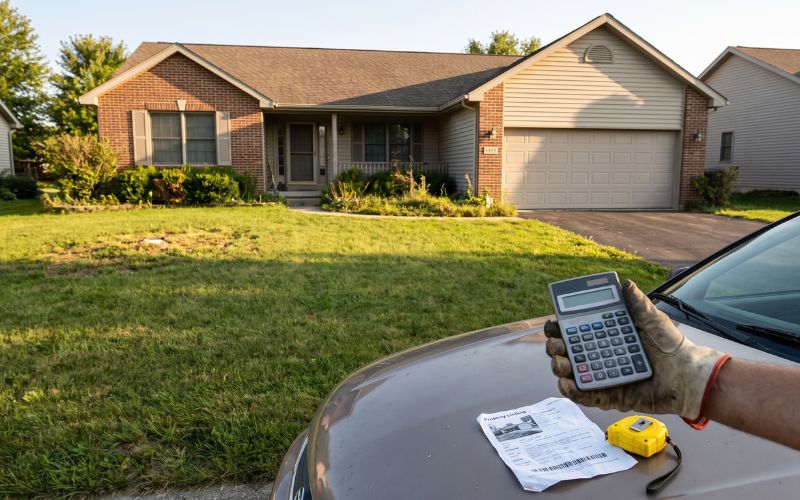
Whatever per square foot calculator you’ve got open, the question behind it is usually the same: is this house, apartment, lease or flooring quote fairly priced for how big it is? The math itself is one division. Price per square foot is the total price divided by the area in square feet, so a $360,000 home with 1,800 square feet works out to $200 a foot, and rent works exactly the same way.
The division is honestly the easy part. Where people get burned is the step before it, when the two square footage numbers they’re comparing don’t measure the same thing, and that’s the part most calculators never mention.
Table of Contents
The Per Square Foot Formula (and How to Flip It Around)
Take the total price and divide it by the total square feet. Rearrange that same formula and you can go backward too, from a per-foot rate to a total cost, or from a budget to how much space it’ll actually buy you.
- Find the total: list price, monthly rent, or the full installed quote.
- Find the square footage, measured the same way for everything you’re comparing.
- Divide the price by the square feet.
- Round to the cent, and if it’s rent, write down whether that’s per month or per year.
| You know | You want | Formula | Example |
| Price and area | Price per sq ft | Price ÷ sq ft | $360,000 ÷ 1,800 = $200 |
| Rate and area | Total cost | Rate × sq ft | $6 × 250 = $1,500 |
| Budget and rate | Area you can afford | Budget ÷ rate | $6,000 ÷ $6 = 1,000 sq ft |
| Monthly rent and area | Yearly rent per sq ft | Rent × 12 ÷ sq ft | $1,950 × 12 ÷ 900 = $26 |
| Yearly rate and area | Monthly rent | Rate × sq ft ÷ 12 | $30 × 2,300 ÷ 12 = $5,750 |
One note before we go on: the prices in our worked examples are made up to keep the math clean, unless we name a source next to them.
Measure the Area First
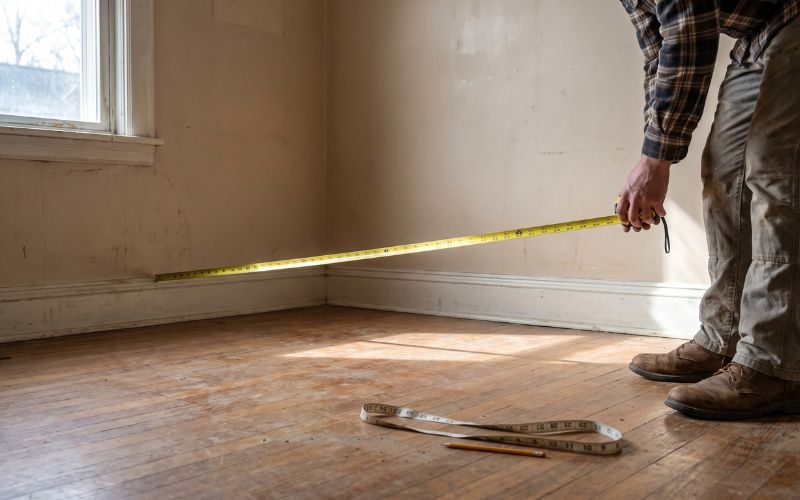
Every per-foot number starts with an area, and our Square Footage Calculator does that part for you, rectangles, L-shapes, triangles and circles included. If you’d rather do it by hand, multiply length by width, chop awkward rooms into simple shapes, and add the pieces back together.
Home Depot’s guide to calculating square footage walks through the same routine: sketch the space, measure it, multiply, then add a little extra for waste if you’re buying materials. A 12-by-12-foot room is 144 square feet. Just convert inches to feet before you multiply (6 inches is 0.5 feet); otherwise, you’ll end up with a number that looks perfectly reasonable and is completely wrong.
Which Square Footage Actually Counts
Whatever you divide by has to be measured the same way for every home or space you’re comparing, and the usual sources often disagree with each other. Honestly, this is the single biggest reason per-foot comparisons go sideways.
Appraisals
Since April 1, 2022, Fannie Mae has required appraisers to use the ANSI Z765-2021 standard on appraisals with interior and exterior inspections. Under it, gross living area means finished space above ground, and things like garages and basements get reported separately. So yes, that gorgeous finished basement still isn’t part of gross living area.
Tax Records
Tax records are the shakiest of the bunch. Assessors don’t always measure the same way appraisers do, and their files can miss an addition entirely or count a garage conversion that was never permitted. We’d treat a tax record as a clue, not a measurement.
Listings
Listings are all over the map, depending on the agent and the local market. Some fold finished basement space into the total and some leave it out, so before you trust a listing’s price per square foot, ask what that number actually includes.
Here’s why it matters so much. Picture a $480,000 home with 1,600 square feet above ground plus an 800-square-foot finished basement. Divide by the above-ground space and you get $300 a foot; divide by all 2,400 finished feet and it drops to $200. Same house. A hundred dollars a foot apart.
Price Per Square Foot When You’re Buying a Home
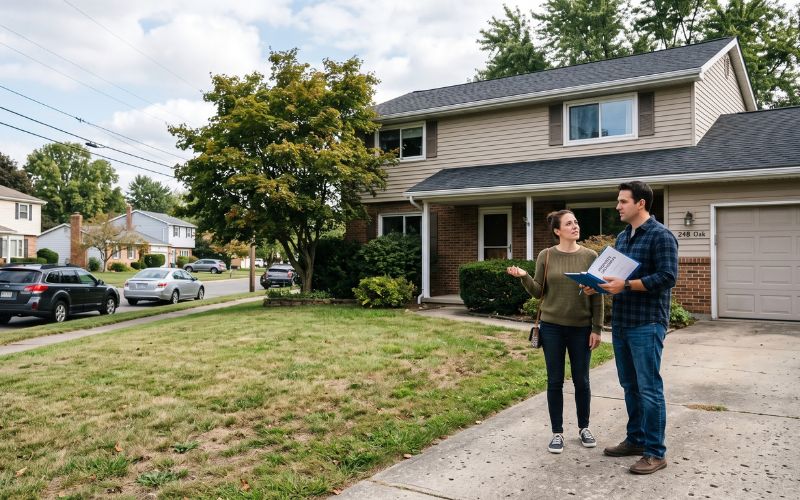
For a purchase, divide the list or sale price by the living area, then compare that only with similar homes close by. Think of it as a filter for spotting which houses deserve a closer look, rather than a verdict on any single one.
Bigger houses almost always come out cheaper per foot, and there’s a boring reason for that. Every home carries costs that don’t really scale with size (the lot, the kitchen, the bathrooms, the heating and cooling), and in a larger house those get spread across more square feet. So a 2,400 square foot place can look like a steal per foot next to a 1,200 square foot one and still cost a whole lot more in total.
Land trips people up too. A listing price includes the lot, but a builder’s per-foot figure usually doesn’t. NAHB’s analysis of Census construction data (2026) puts the median contract price for custom homes started in 2025 at $171 per square foot, up from $156 in 2021, while spec homes came in at $152 once the value of the lot was taken out. That 12.6% gap is the biggest custom-home premium NAHB has recorded since 2011. Comparing a listing’s per-foot price against a build quote without adding land back in? That’s apples to oranges.
How to Average Price Per Square Foot Across Listings

Use the median per-foot price of recent, similar sales. The plain average (the mean) can get yanked around by a single renovated or oddball house, and that’s exactly what happens on this made-up street of five sales:
| Home | Price | Sq ft | Price per sq ft |
| A | $300,000 | 1,500 | $200.00 |
| B | $330,000 | 1,650 | $200.00 |
| C | $285,000 | 1,300 | $219.23 |
| D | $420,000 | 2,400 | $175.00 |
| E (fully renovated) | $650,000 | 2,000 | $325.00 |
| Mean of the five | $223.85 | ||
| Median | $200.00 | ||
| Pooled (total price ÷ total sq ft) | $1,985,000 | 8,850 | $224.29 |
Now price a 1,700-square-foot house on that street. The median points to about $340,000, while the mean says roughly $380,545, which is a $40,000 swing thanks to one renovated house. We’d go with the median, toss out obvious outliers, and stick to sales from the last few months.
Rent and Lease Price Per Square Foot
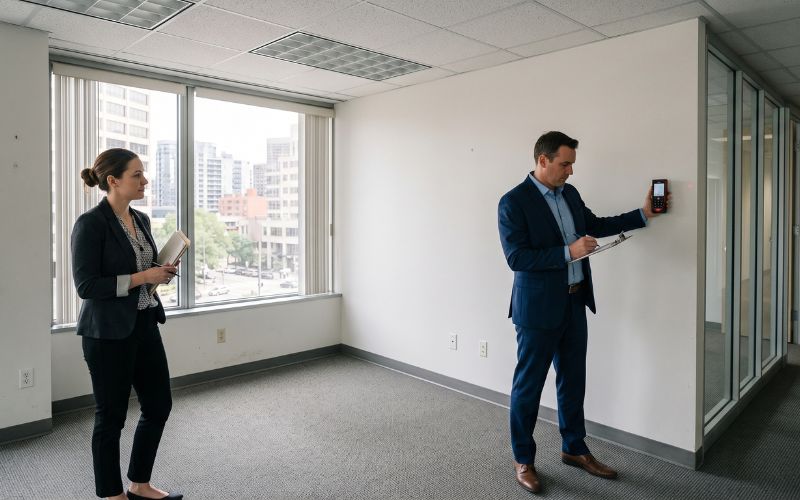
Divide the rent by the area, and always say whether you mean per month or per year. Home rentals are usually thought of monthly, but US commercial space is normally quoted per square foot per year and then paid in monthly chunks.
On the residential side, $1,950 a month for 900 square feet comes to $2.17 per square foot per month. Multiply by 12 and it’s $26 a year.
Commercial leases have a second catch. In buildings with several tenants, rent is usually charged on rentable square feet, which is the space you actually use plus your slice of the lobby, hallways and restrooms. The ratio between the two is called the load factor, and it can quietly bump up what you really pay.
Say an office has 2,000 usable square feet, a 1.15 load factor, and a rate of $30 per rentable square foot per year:
- Rentable area: 2,000 × 1.15 = 2,300 square feet
- Yearly rent: $30 × 2,300 = $69,000, or $5,750 a month
- What you’re really paying per usable foot: $69,000 ÷ 2,000 = $34.50
Load factors vary from building to building, so get the rentable and usable numbers in writing. And on a triple net (NNN) lease, taxes, insurance and common-area upkeep land on top of the base rent, which is why we’d always compare total occupancy cost per usable foot rather than the shiny headline rate.
Rent vs Buy, One Square Foot at a Time
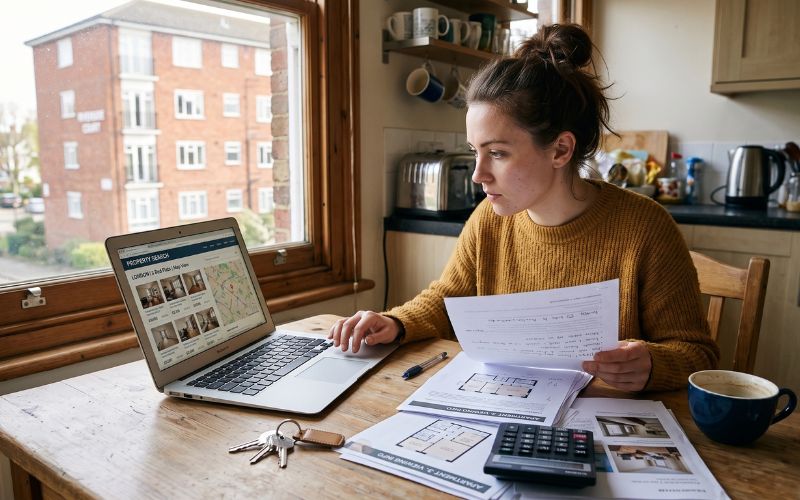
You can line up renting against buying per foot, as long as both sit on the same time basis. Say a 1,800 square foot house sells for $200 a foot and a similar one down the road rents for $2,400 a month. That rent works out to $16 per square foot per year, and the purchase price comes to 12.5 years of rent.
It’s a handy gut check, nothing more. Interest, taxes, insurance, maintenance and appreciation all sit outside it, so for the real decision, use a full rent-versus-buy calculator or sit down with a lender.
Cost Per Square Foot for Flooring, Tile, Countertops, Rugs and Paint
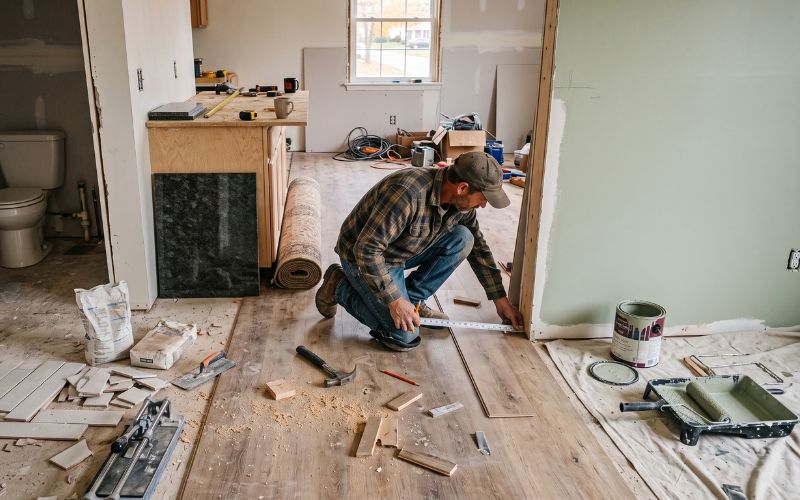
For materials, compare prices on the area you measured but budget on the area you’ll actually order. Those two numbers are never the same, because some material always ends up as offcuts.
Flooring
Home Depot suggests buying about 5 to 10% extra for waste. Take a 13 by 15 foot room, so 195 square feet, getting vinyl plank that comes in 20 square foot boxes at $3.29 a foot. Add 10% and you need 214.5 square feet, which rounds up to 11 boxes: 220 square feet, $723.80 all in. Budgets work backward the same way. $6,000 at $6 a foot installed buys 1,000 ordered feet, which only covers about 909 measured feet once waste comes off the top.
Contractor Quotes
Divide every bid by the same measured area, and read the scope before you compare anything. Quote A is $2,340 installed with removal of the old floor included, so $12.00 a foot on our 195 square foot room. Quote B looks cheaper at $2,145 but leaves out a $300 removal charge. That makes it $2,445 really, or $12.54 a foot, so the “cheaper” quote turns out to be the pricier one. Ask whether each quote is materials only or installed, and whether trim, underlayment and haul-away are in there.
Tile
Small rooms punish sloppy math. All the cuts around a toilet and tub eat more tile, so we’d lean toward the high end of that waste range. Our small bathroom ideas can help you settle on a tile size before you start pricing it.
Countertops
Countertops usually get measured in inches, so multiply length by depth in inches and divide by 144. A 26 by 96 inch run is 2,496 square inches, or 17.33 square feet, which at $65 a foot comes to about $1,127. Check with the fabricator whether cutouts, edge profiles or a minimum charge get added on top. Still picking a surface? Our kitchen countertop ideas for every budget are a decent place to narrow it down first.
Rugs
Rugs are sold by size, but per-foot math still shows you the value. A $480 rug at 8 by 10 feet costs $6.00 a square foot, while a $594 one at 9 by 12 comes to $5.50. Buy the size the room needs first, then compare.
Paint
Paint is the odd one out because it’s priced by coverage, not floor area. Sherwin-Williams says a gallon of paint typically covers about 350 to 400 square feet, and a gallon of primer about 200 to 300. A 12 by 14 foot room with 8 foot ceilings has 416 square feet of wall. Take off a door and two windows (we’re assuming 20 and 15 square feet each) and you’re at 366, so two coats means 732 square feet, a little over 2 gallons at 350 per gallon.
What’s a Normal Price Per Square Foot?
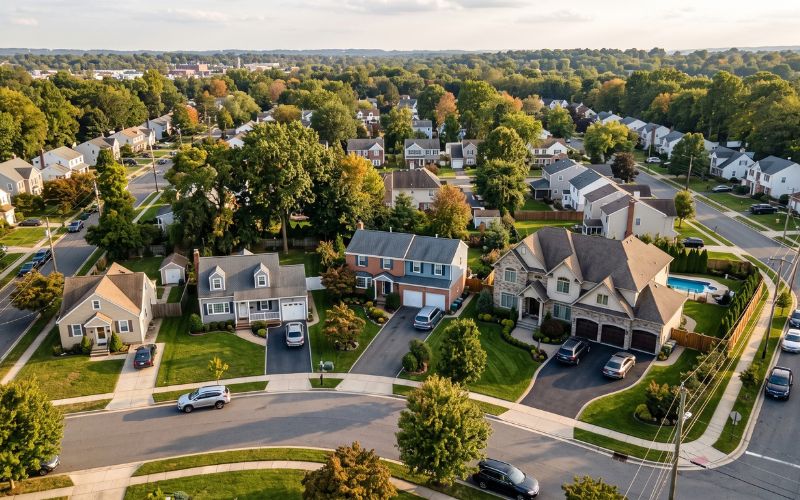
It depends a lot on where you are and what exactly is being measured. These public figures give you a rough sense of scale, and every one of them measures something a little different.
| What it Measures | Figure | Source |
| Median sale price per sq ft, new single-family homes, US | $154.70 | Census Bureau, 2023 data |
| Same measure by region: South / Midwest / West / Northeast | $146.64 / $156.25 / $195.38 / $220.95 | Census Bureau, 2023 data |
| Average sale price per sq ft, new homes, US | $168.86 (2024), $171.95 (2025) | LendingTree analyses of Census data |
| Custom home median contract price, lot excluded | $171 | NAHB, homes started in 2025 |
| Spec home median, lot value excluded | $152 | NAHB, homes started in 2025 |
| Median listing price per sq ft, all active listings | $224 (August 2026) | Realtor.com via FRED |
A few things jump out of that table. In 2023, the Northeast median ran about 51% above the South’s (Census Bureau), which tells you a national number says very little about any one town. Realtor.com’s $224 (FRED) covers asking prices on every active listing, old and new, while the Census figures only cover new homes that actually sold, so of course they don’t match.
There’s also a sneaky trap in the Census medians themselves. New single-family homes sold in 2025 had a median price of $417,400 and a median size of 2,194 square feet. Divide one by the other and you get about $190, but that’s not the median price per square foot, because Census works that out house by house. The median-priced home and the median-sized home just aren’t the same house. The Lending Tree averages come from its analysis of Census data.
Converting to Price Per Square Meter
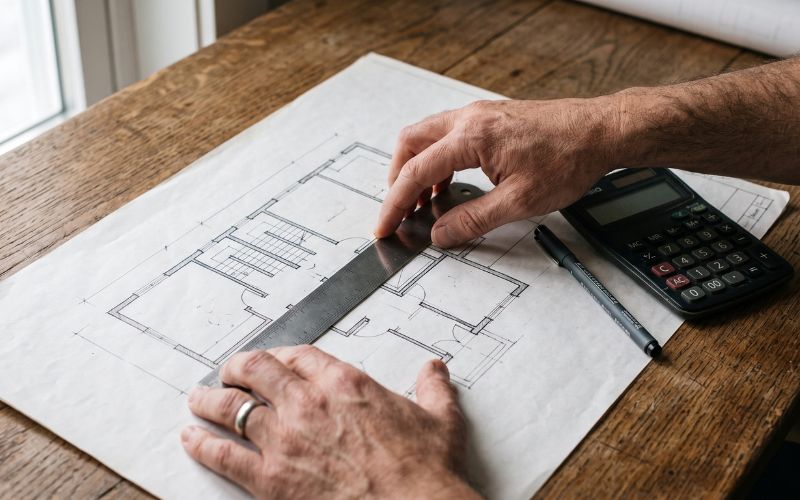
Multiply price per square foot by 10.764 to get price per square meter. One square foot is exactly 0.09290304 square meters under the NIST definition, which makes a square meter about 10.764 square feet, so a $200 per square foot home is roughly $2,153 per square meter. Keep an eye out for calculators using 10.87 instead, because that little slip pushes metric prices up by about 1%.
What Any Per Square Foot Calculator Can’t Check for You
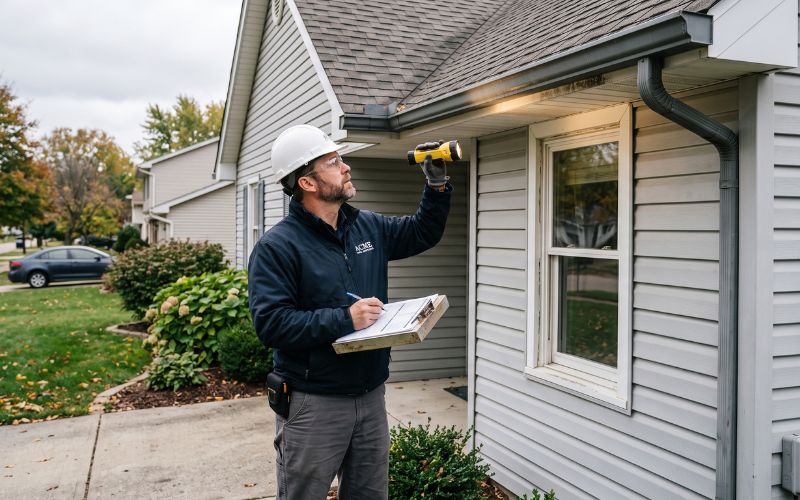
A per square foot calculator is a comparison shortcut, and it’s definitely not an appraisal. It can’t see condition, layout, lot size, views, the school zone or a brand-new roof, and it can’t fix a square footage figure that was wrong to begin with. Use it to build a shortlist, then lean on recent comparable sales, and if you need a value you can actually rely on, talk to a licensed appraiser, a local agent or your lender.
Frequently Asked Questions
What is a good price per square foot for a house?
A good one sits at or below the median for similar homes that sold recently in the same neighborhood. National numbers are only background. Realtor.com’s median listing price per square foot hit $224 in August 2026, but local medians can land way above or below that.
How do you figure price per square foot for land?
Divide the lot price by the lot size in square feet. An acre is 43,560 square feet, so an $87,120 one-acre lot comes to $2 per square foot. Land usually gets compared per acre, though, so check which unit nearby sales are using.
Does price per square foot include HOA fees or closing costs?
Nope, it only uses the sale or list price. HOA dues, property taxes, insurance and closing costs all sit outside it, so two homes with the exact same per-foot price can cost you very different amounts every month. Compare total monthly cost as well.
Can I use price per square foot to negotiate?
Yes, as backup. Bring the median per-foot price of close, recent, similar sales that were measured the same way. Sellers and appraisers weigh condition, location and features too, so the per-foot math gets the conversation going rather than settling it.
The One Thing to Check Before You Divide
Your answer is only ever as good as the square footage underneath it, so make sure both numbers use the same measurement, the same time period and the same scope before you do anything else. Get an accurate area from our square footage calculator first, then run the division, and when you’re ready to plan the room itself, the rest of our home design tools are there too.