

I can still recall how I used to walk around my first Spanish style home in Santa Barbara. Underfoot terracotta floors, the effect of sunlight coming through arched doorways and that certain feeling of being in history, which encompassed every turn, has changed my perception of residential architecture forever.
This guide will tell you all that there is to know about Spanish-style houses, including their rich history and modern Spanish interior design in 2026. You either own a Spanish home or have always wanted one in your dreams and I would like to make you see why this style can remain so beautiful and unchanging.
Table of Contents
What Makes Spanish Style Homes So Special to Me
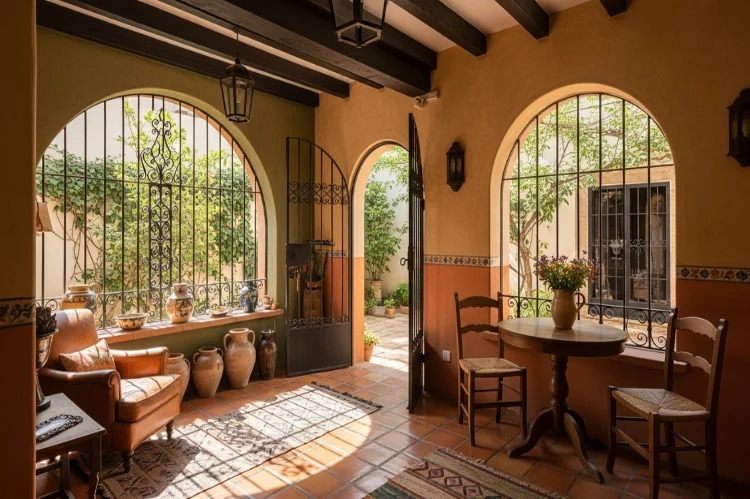
Spaniards style homes are unique due to the fact that indoor and outdoor living are fused together in these houses. The design adopts the use of natural resources such as clay, wood and iron. These features provide spaces that are grounded and related to the earth, which is deeply rooted in the way I feel a home should be.
The most appealing one to me is the sincerity of Spanish architectural homes. There is no pretense here. During summer, thick walls ensure that interiors are cool. Courtyards bring fresh air inside during the day. All features have their purpose and also are quite beautiful, which I think is much more uncommon.
The 7 Key Features I Always Look For
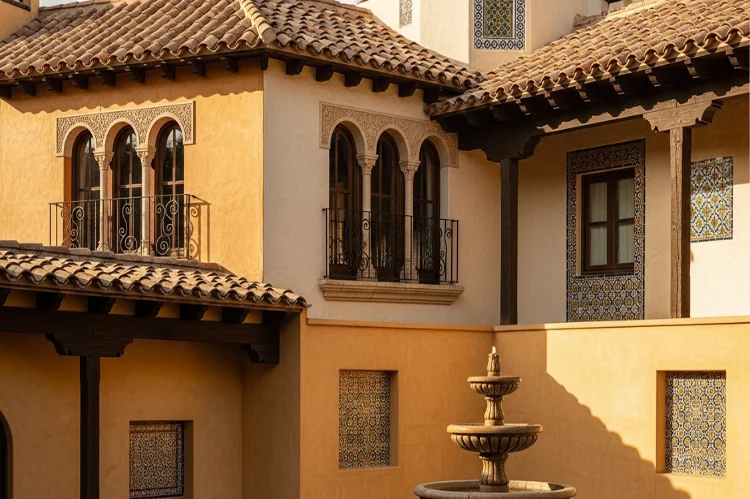
Having made a visit to dozens of Spanish homes, I have discovered seven distinguishing features of this style. These are red clay terracotta roof tiles, which have a service life of 50 to 100 years when well maintained.
There is thermal mass through stucco exterior walls that have warm earth tones. Moorish influences of medieval Spain can be traced in arched doorways and windows.
The rest are bare wooden ceiling beams, which are known as vigas, wrought iron ornamental railing and fixtures, interior courtyards with fountains, and decorative hand-painted tiles.
As described by the U.S. National Park Service, these elements can be traced directly to the Spanish Colonial mission architecture of the 1500s.
The History That Shaped My Understanding of Spanish Homes
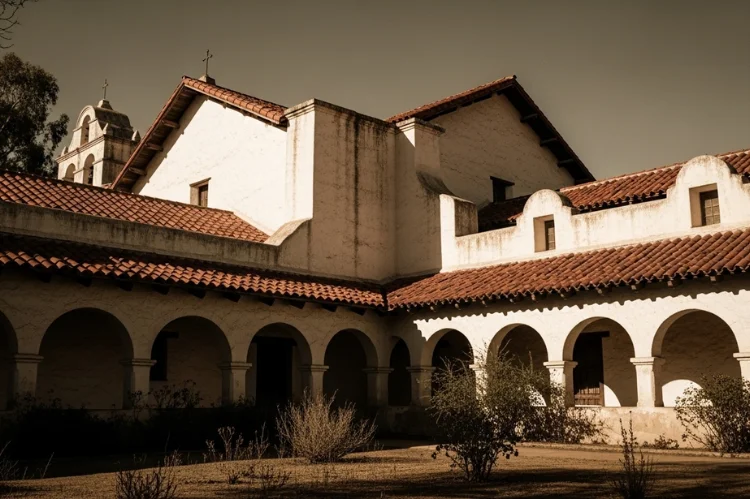
Knowing more in the history of designing the Spanish colonial house greatly enhanced my desire. In 1565, St. Augustine, Florida, became the first permanent Spanish settlement in America. There, Spanish settlers constructed missions throughout Florida, New Mexico beginning in 1598, Texas, Arizona beginning in 1690 and California beginning in 1769.
Our current conception of style actually appeared following the Panama California Exposition of 1915 in San Diego. Spanish Revival homes that were demonstrated by architects Bertram Goodhue and Carleton Winslow gripped the imagination of the American people. The style reached its peak between 1915 and 1931 and the city has made it use in every part of Santa Barbara following the disastrous earthquake in 1925.
What I Learned About Spanish Colonial Architecture (1590s to 1821)
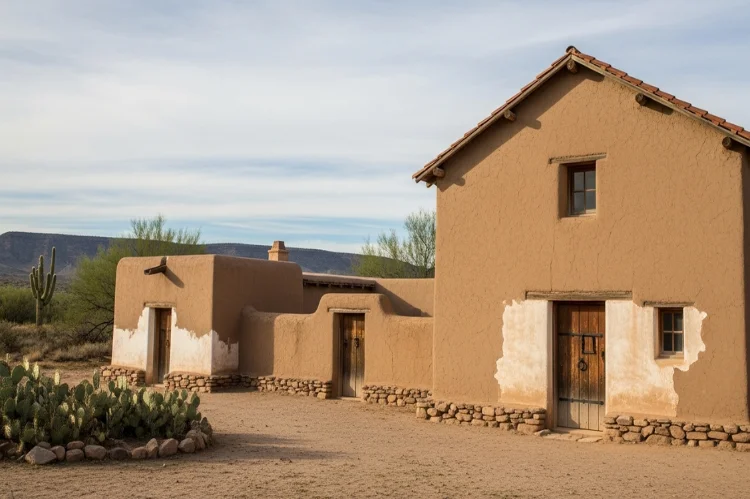
Spanish colonial interior design was based on need and not fashion. In the Southwest, timber was in short supply, and the settlers made adobe bricks by drying them in the sun. The walls were two feet or more and offered unsurpassed defense against desert heat. The Spanish Laws of the Indies gave official guidelines of buildings.
There were three types of settlements that had a major influence on early architecture. Pueblos were also civil towns whose foundation was the central plazas where the community took place.
Presidios were military castles that had defense walls and strategic designs. Missions integrated churches and living quarters with workshops to make themselves self-sufficient. Both of the types contributed to what is known nowadays as traditional Spanish interior design.
The Spanish Revival Movement That Changed Everything (1915 to 1940)
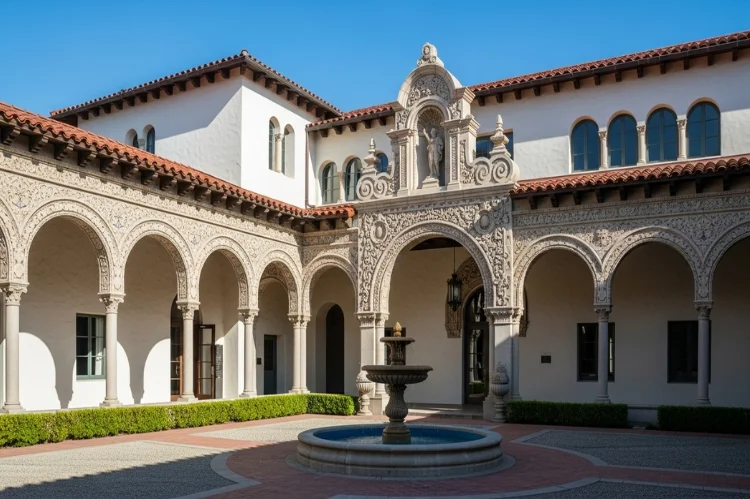
Spanish revival interior design idealized the colonial history and incorporated the decorative elements of the Baroque and Moorish styles. George Washington Smith, an architect, was known because of his classy designs of Santa Barbara which have endured up to date. Addison Mizner revolutionized the area of Palm Beach in Florida with Mediterranean interpretations that characterized the area.
Its decline coincided with the great depression where the Spanish style mansion construction was perceived to be too lavish at the moment. Nevertheless, the mid-century architects continued the flame with smaller projects. Spanish revival decor is now experiencing a resurgence of popularity among homeowners who want to add some character to what modern day construction typically lacks.
How I Distinguish Spanish Colonial, Revival, and Mediterranean Styles
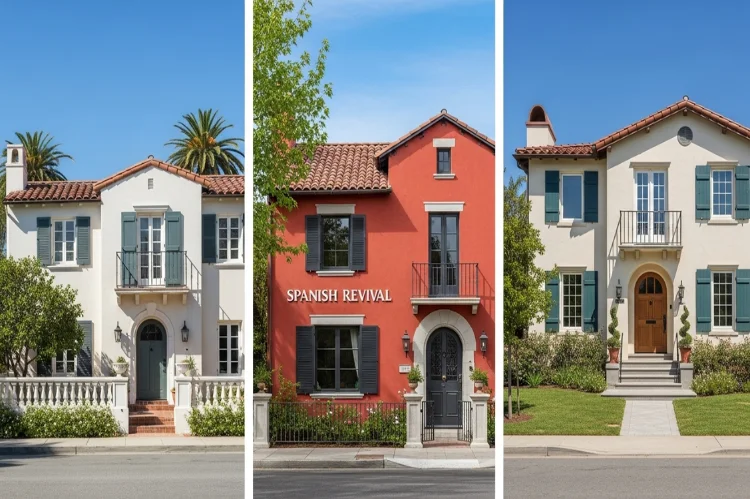
It has taken me years to realize the difference between Spanish colonial interior design and the Spanish revival interior design. Spanish Colonial (1590s to 1821) was constructed by real settlements with the use of adobe and local supplies. The romanticized American interpretation of the Spanish Revival was called Spanish Revival (1915 to 1940) and had more elaborate Baroque and Moorish decorative features.
The Spanish Mediterranean interior design is also more generalized with the influences of Italian, Greek, and French Riviera. These differences are discussed in the Los Angeles City Planning Historic Context Statement. Broadly, the Spanish styles are more stifling with the Mediterranean inclined towards Venetian extravagance.
What Sets Hacienda Style Apart in My Experience
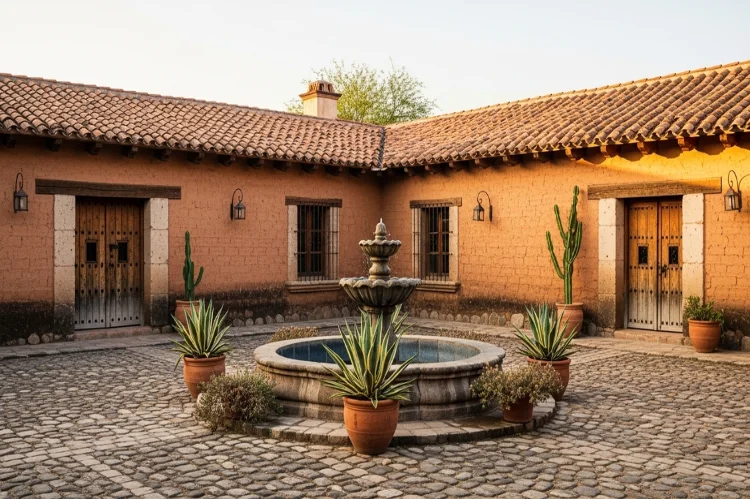
The Hacienda Spanish style interior designs have their root in the working estate traditions of colonial Mexico. These large estates had central fountains with adobe walls all around them. The work of the ranch demanded some realistic planning of the links between the living quarters and workshops, stables, as well as storage facilities.
Hacienda style house interior decorations are more inclined to rustic simplicity than to elaborate decor. Comfortable spaces are made with heavy wooden furniture, leather seats and woven fabrics. Clay tiles roofs are low-pitched and are over large porches that offer shades. I see this style most true to itself when it still has that working ranch thing and the honest materials.
Exterior Features That Caught My Eye First
Terracotta Roof Tiles That Last Generations
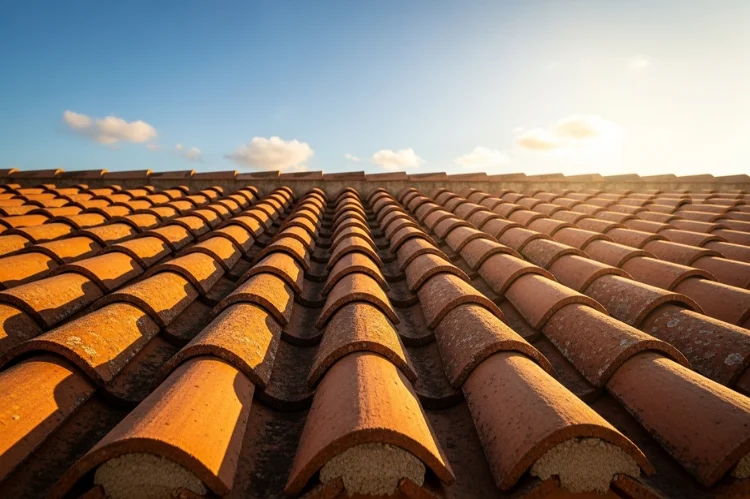
The red clay roof is my first observation on any Spanish house. These wooden barrel tiles (also known as Spanish S tiles) were initially used in Florida by early settlers. They are good reflectors of sunlight, they are well insulated and can withstand wind of up to 150 mph during hurricanes. The common sizes would be 8.5 inches by 20 inches.
The longest part is what impresses me more. Terracotta tiles have a life-span of 50-100 years with proper maintenance which is extremely long compared to asphalt shingles. Mission tiles are constructed in a two-piece format that is a flat pan and rounded over cover. Both styles provide Spanish design house with that special silhouette of which I feel so fond of with blue skies.
Why I Love Stucco Walls for Temperature Control
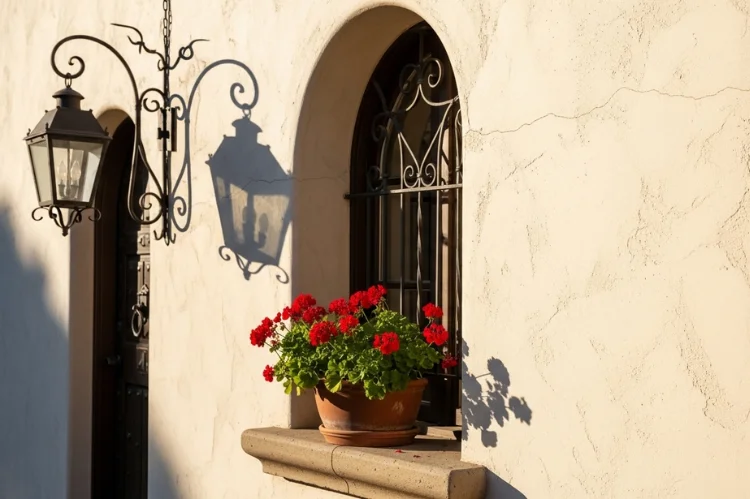
The Spanish style houses have stucco walls, which do not only appear beautiful to the visitors. The sand, cement and water make the mixture producing thick walls that have good thermal mass. This maintains the interiors cool throughout summer and warm during winter seasons. Mostly used colors are white, cream, beige and warm terracotta.
I favor slightly rough finishes to smooth stucco-covered walls. The flaws are realistic and are well lit during the day. In case you want to have it in the style of a Mediterranean-style front entrance, stucco goes perfectly with terra cotta tile walkways. Get more ideas on front walks in these front walkway ideas.
Arched Doorways That Changed How I See Entryways
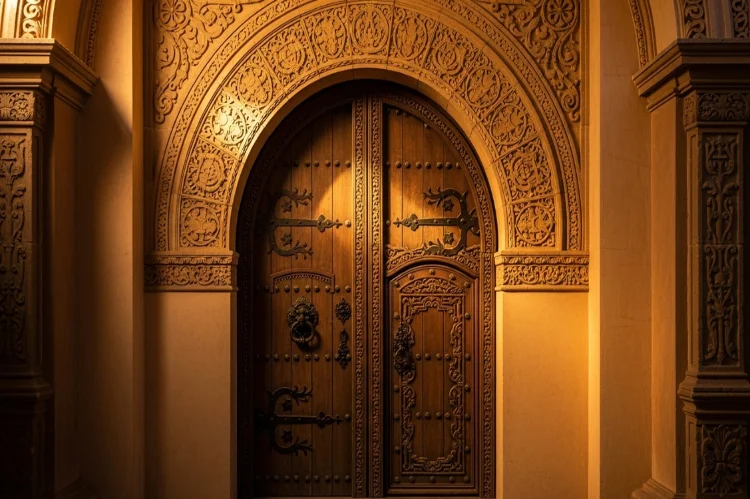
The architecture of Spanish style comprises of round arches which are influenced by Moorish architecture during the period of the Muslim reign in Spain occurring between 11th and 15th centuries. The arches make me feel that there is so much flowing, romanticism that is not possible with ordinary doorways which are rectangular. They are found at entryways, windows, walkways, and passages at the courtyard.
There are also arches where the arch is topped with keystone details to give it architectural interest and heaviness. The key is proper proportion. Too small is shyness and uncertain and oversized is melodramatic and overwhelming. The Spanish style home examples are the best ones where the height of the arch is matched with the ceiling clearance that provides friendly transitions between the spaces.
Wrought Iron Details I Cannot Stop Admiring
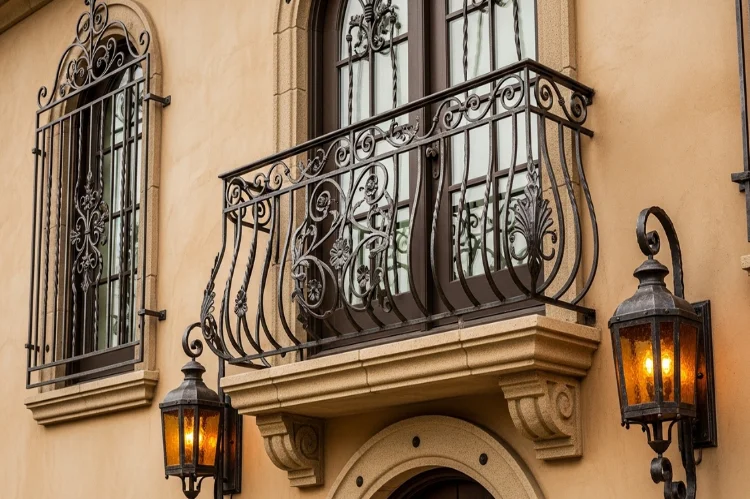
Wrought iron is also used in interior and exterior designs of Spanish homes which were genuine. Rejas are window grilles that give a source of security and decoration. There is ornamental scrollwork used in stair railings. Boundaries of property are demarcated by gates and fences that the mass productions of alternatives do not have.
The use of hand forged iron gives the old-world charm that can not be matched with factory products. A good number of traditional designs are affected by the Gothic and Moorish features. To achieve this appearance at the entrance, you may want to install wrought iron gates with scrollwork such as those installed in the driveway gate designs. This material is beneficial to light fixtures, balconies and hardware.
Courtyards That Became My Favorite Outdoor Spaces
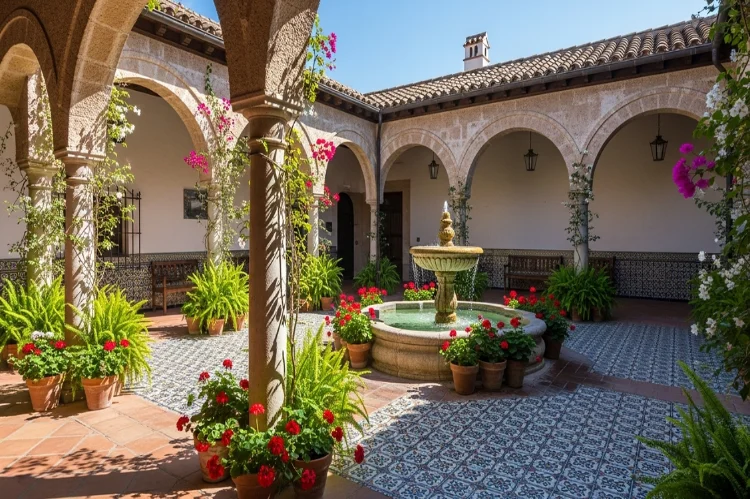
Hacienda Spanish style interior design layouts are characterized by central courtyards in deeper senses. They were traditionally located on the center of the home, in which they were used to cook outdoors to maintain the main rooms cool in hot summers. These spaces are enclosed by the white stucco walls to make a room outside. The floors are covered with decorative tile, brick or stone patterns.
Most courtyards can be found to have fountains as a source of movement and sound. Arched doors and gates made out of wrought iron restrict access and contribute to visual appeal. The scene is topped with plantation of bougainvillea, citrus trees, and olive trees. To match the adobe garden walls that are a perfect match to this style, refer to these garden wall ideas.
Spanish Interior Design Elements That Transformed My Perspective
Exposed Wooden Beams I Dream About Installing
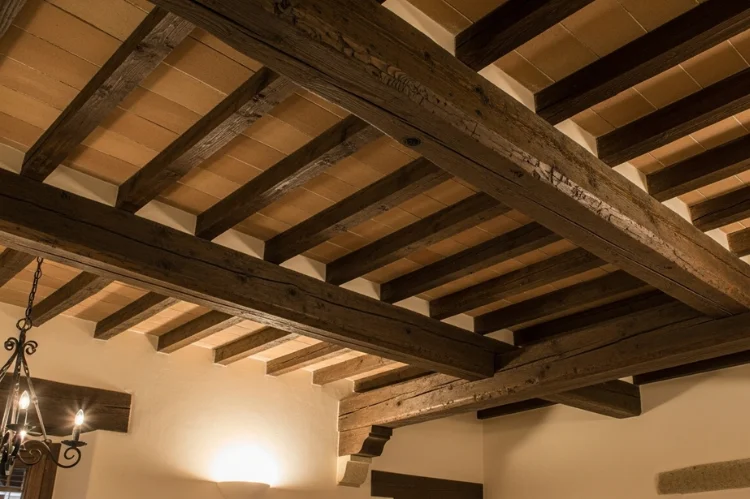
Vigas are exposed beams of the ceiling made of round peeled logs which are used both structurally and ornamentally. Shorter poles known as latillas were placed at right angles to vigas in elaborate designs. The beams are usually decorated with corbels (sculptural supports) to give it a handcrafted effect. Dark stained or reclaimed wood is the most appropriate in the traditional Spanish interior design..
These beams give a feeling of visual warmth that painted ceilings do not provide at all. The texture attracts the eyes to the upwards direction thus making the rooms look taller and more entertaining. In these porch ceiling ideas, unexplored covered outdoor spaces that are equally attractive would be the use of exposed beam porch ceiling designs. The investment is characteristically dividend-paying.
Hand Painted Tiles That Tell Stories
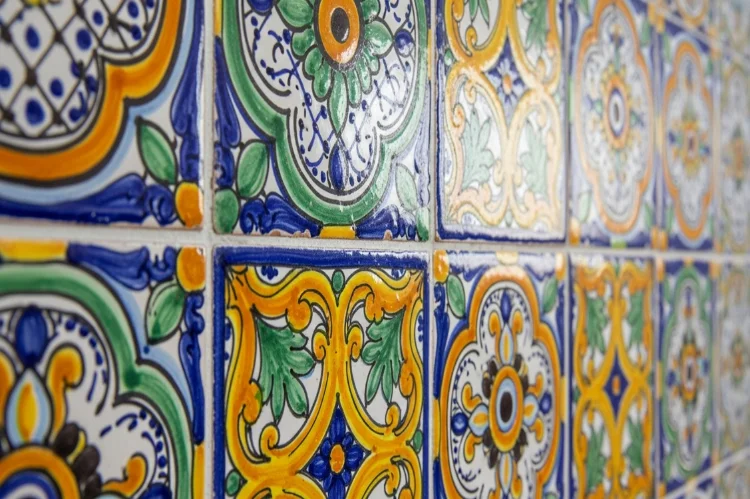
Talavera tiles were made in 16th century Spain but arrived in Mexico with Spanish monks in 1571. These are hand painted ceramics which were on the UNESCO’s Intangible Cultural Heritage list in 2019. The classical colors are cobalt blue, yellow, orange, green, mauve and black.
Saltillo floors are the centuries old handmade terracotta flooring tiles of Castillo, Mexico. They are hand pressed and wood fired and have earth tones consisting of red, orange, brown and beige. Price is about 6.50 per square foot on site. Both types of tiles are necessary to adorn both the interior and exterior design of Spanish authenticity with respect to tradition.
Color Palettes I Recommend for Authentic Results
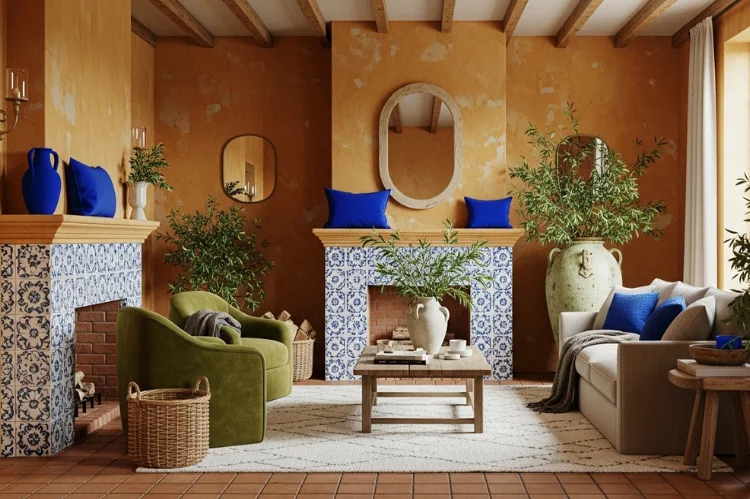
The Spanish style decor is based on certain color families that reflect the landscape. Conventional warm tones on earth are terracotta, ochre (golden yellow), burnt orange, rust, and deep brown. Accents and tiles used in Mediterranean blues and greens include cobalt, turquoise, emerald, olive and teal accents and tiles.
Walls are usually done in warm whites, cream, alabaster or champagne instead of pure whites. Burgundy and deep reds are the accent colors. Ruby, sangria and burnt sienna are enriching without obtruding. To find the right balance of these colors in Spanish decor, one will start with neutral walls and add some more vivid colors with the help of textiles and accessories.
How I Would Design a Spanish Style Living Room
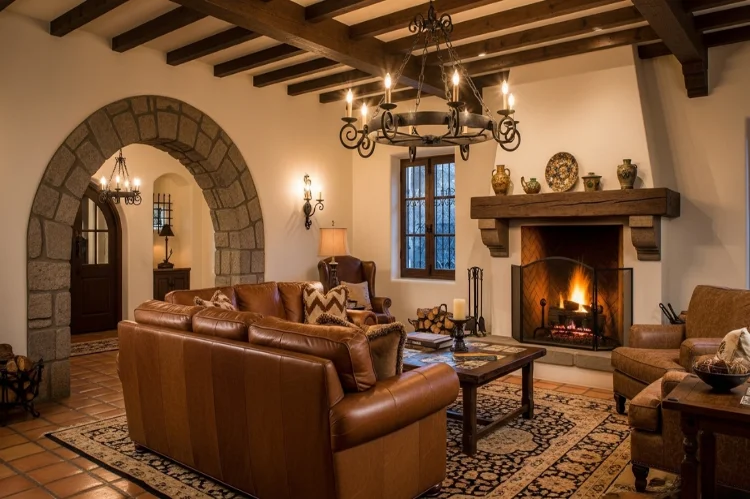
The Spanish style living room focuses on talking and relaxing as opposed to watching television. Straight line mission furniture and exposed joinery is ideal in this instance. Pieces of solid oak, cherry or maple provide solidity to the space. Full grain leather and cognac or distressed leather sofas are also warming.
Fire places are exceptional in design of Spanish revival living room. Arched door frames, plaster, or stucco, are true to the style. Talavera tiles or Cantera stone characterize and give color. Wrought iron chandeliers and wall sconces are used to offer warm ambient lighting that modern fixtures cannot offer.
Furniture Choices That Create Authentic Spanish Living Rooms
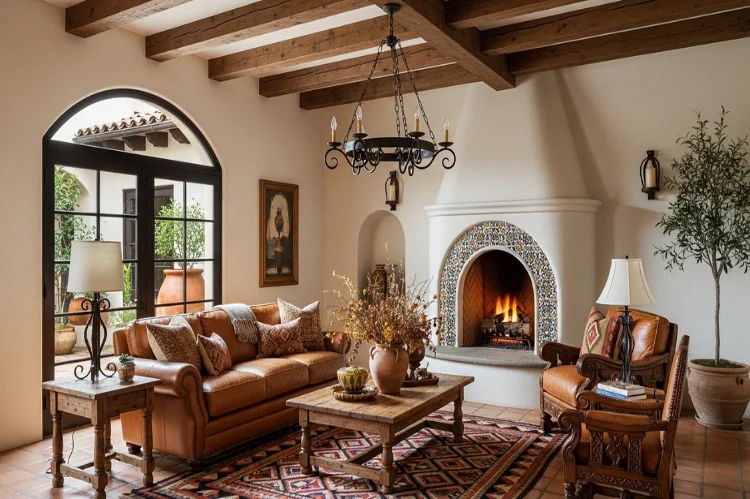
Spanish modern living room furniture finds a balance between the comfort and visual weight and presence. Seating areas are well anchored with heavy wooden coffee tables with carved details. Leather club chairs are another seating that does not match perfectly. Geometric patterned area rugs are used to cushion terracotta or tile floors.
Modern sofas should not be overstuffed and should not oppose the nature of the architecture. To create outdoor entertainment areas that have the same warmth, refer to a courtyard bar with terra cotta accents added as part of these outdoor bar ideas. On the indoor, maintain warm neutral upholstery and have architectural features as the stars of the room.
Kitchen Design Ideas That Capture Spanish Charm
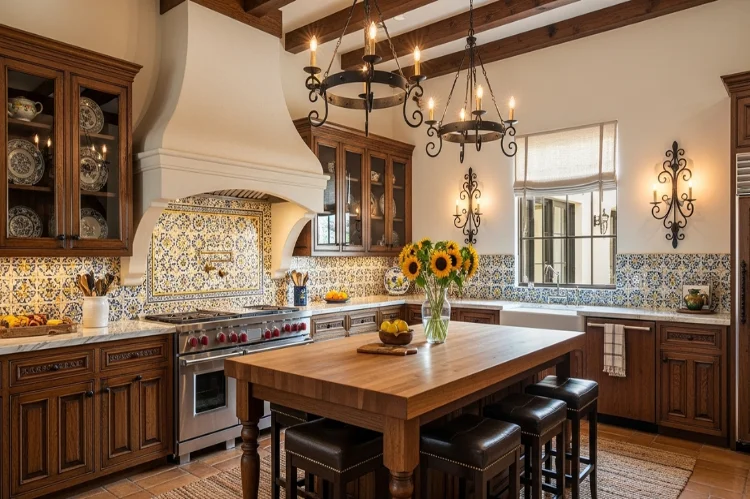
This Spanish house interior kitchen creates a balance between beauty and common use. Talavera tile back splashes are very beautiful focal points catching the eye instantly. Dark wood or cream painted cabinets can be used either way, it is up to you. The hardware and light fixtures are made of wrought iron and hold the whole together.
The arched range hoods create bold messages in every kitchen layout. Counters have hand painted tile accents which offer personality and color to the counters. To match this style with the other cabinet options, consider antique-style kitchen cabinets in the antique white kitchen cabinets category. Have bare and simple countertops in order to allow decoration.
Kitchen Details That Make a Difference in My Experience
Spanish modern interior kitchens are successful when attention is given to details. Open shelves are used to display hand painted pottery and copper cookware. The pot racks are made of wrought iron and hung above islands to serve the purpose and decorate as well. Countertops are made of stone or concrete, which becomes patinaed and beautiful with years of use.
Sinks are worth taking into consideration as well in genuine designs. Copper or hammered metal feel farmhouse apron sinks are period correct and add a touch of character. Herb pots in deep sills above sinks bring outdoors in. All these tiny details make the difference between a regular kitchen and the authentic interior Spanish style homes designs that are lived in and loved.
Creating a Restful Spanish Style Bedroom
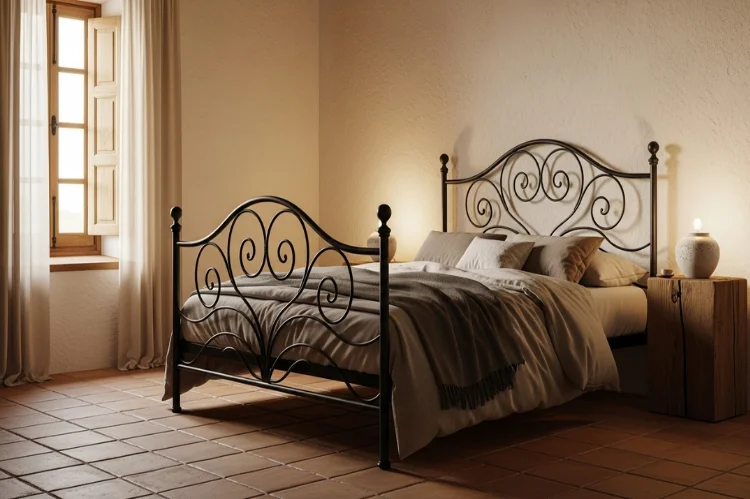
Spanish style home interior has bedrooms that are mostly treated with light ceiling systems compared to the common areas. Beam details or flat ceilings do not make the space look heavy when one is sleeping. Bed frames made of wrought iron are natural centers comprised of their ornate scroll work. The walls in textured plaster are not too thick as they do not occupy the entire space.
Hard floors such as tile floors are covered with warm textiles and woven rugs. Light wood furniture items and dark walls are contrasting. The bedding should be in Spanish interior colors such as soft terracotta, muted gold or sage green. This is aimed at relaxation, hence, restraint is of the essence here compared to other rooms in the house.
Bathroom Details That Complete the Spanish Look
Typical bathrooms are turned into the interior space of the Spanish villa interior with amazing effect by the use of the hand painted tile wainscoting. The flooring material palette is furthered in the home with terracotta or decorative floor tiles. Wrought iron fittings, mirrors are consistent with other rooms. Wall niches and arched mirrors are well echoed.
The finishes of tadelakt (traditional Moroccan plaster) or microcement are perfect on walls and shower surrounds. These waterproof finishes remove grout lines and add interest and texture. To decorate using the Spanish style, the bathrooms present a chance to apply more vivid tile designs as they are smaller in size.
Entryway Ideas That Set the Tone for Your Spanish Home
Its entrance will welcome the visitors to your philosophy of Spanish home design as soon as they walk into it. Models have heavy iron-headed wooden doors with Clavos (decorative nail heads) that produce striking first impressions. There are arched openings which lead to foyer spaces. The language of materials in the whole house is formed by the terracotta or patterned tile floors.
The pottery, the religious iconography, or the treasures accumulated in years are put on display in wall niches. Evening arrivals are illuminated by warm light lanterns made of wrought iron. Crowded wood benches have the sitting place where shoes are removed. These features convey instantly the image of Spanish style homes interior even before the guests look at another room.
Outdoor Living Spaces I Find Essential for Spanish Homes
Covered Patios and Loggias That Extend Living Space
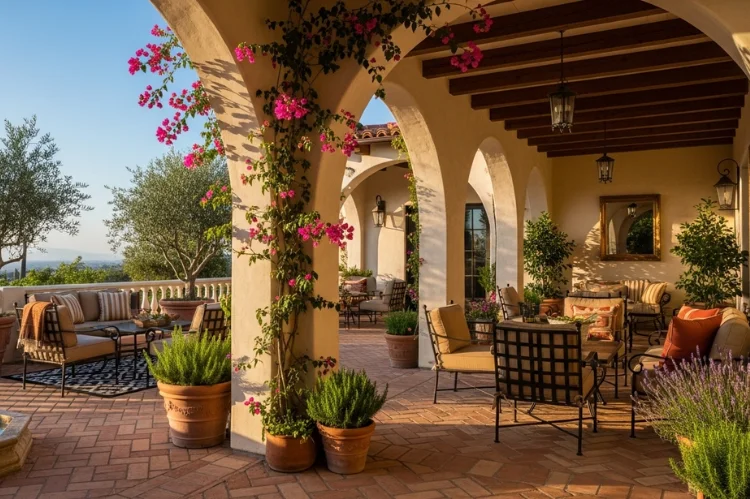
Spanish modern homes have no demarcation between the outside and internal lives. Outdoor rooms have an arcaded column design with arches around patios (loggias) that have been covered. Terracotta tile roofs are supported by stucco columns that are prolonged to make the home look better. Outdoor chairs that have a colorful cushion will be comfortable all year round.
The pergolas covered with bougainvillea vines offer partial shading, but they are still airy. String lights and lanterns can be used to extend the evening use into the colder hours. To have some inspiration on how to create a similar outdoor room, go through the gazebo ideas under Mediterranean gazebos. It is all about making the outdoor spaces as warm as the interior rooms.
Fountains and Water Features That Add Tranquility
The Spanish hacienda style homes are characterized by water features dominant in the courtyards and gardens. Tiered water fountains, mosaic tile fountains, wall water fountains and plain water basins are all effective. Some of the materials used are hand painted Talavera tiles, carved stone, and terracotta. Noise in the street is covered by the sound of flowing water and a peaceful atmosphere is established.
Stand where you will hear and see them in your main quarters within. Courtyard centers are more traditional and patios which are covered are equally acceptable to place. Even the small wall mounted fountains help in creating the Spanish home design ambience by the soft sounds they produce.
Garden Elements That Complement Spanish Architecture
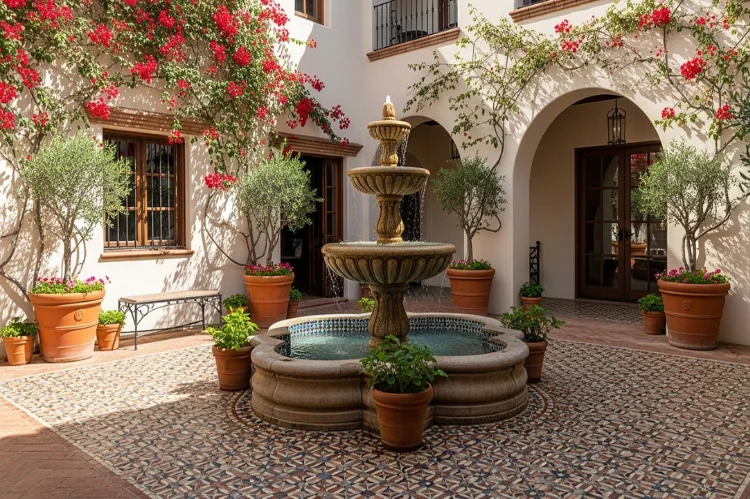
In hot climates, drought tolerant plants are the ideal match in the Spanish contemporary house. When established, agaves, succulents and soft leaf yucca do not need a lot of water. Olive trees, lavender, citrus, and rosemary are Mediterranean plants, which are also adapted to such climatic conditions. Attractive ground covers comprise of decomposed granite and pea gravel.
Terracotta pots and ornamental urns provide sculptural details all over the garden. To provide really nice patio border ideas to enclose these gardens, visit terracotta patio borders in patio border ideas. Plants in odd numbers so that the group looks natural. Visual depth and interest Layer heights by ground to trees.
Modern Spanish Style Trends I Am Watching for 2026
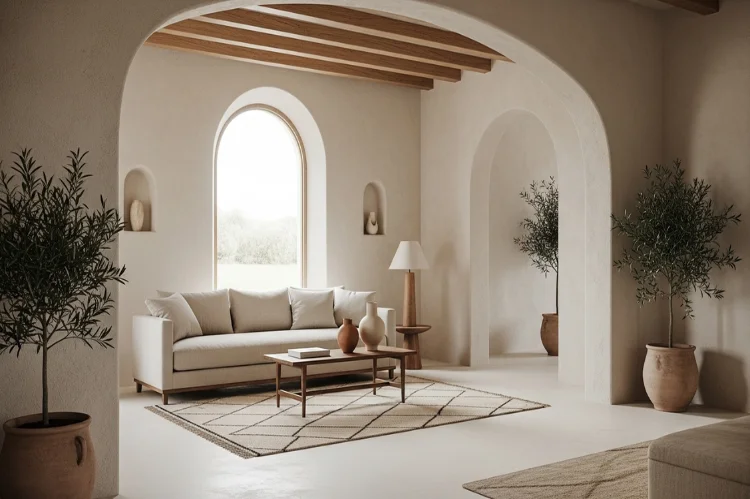
The modern Spanish style homes are a good combination of the traditional and the modern feelings. Elegant lines take the place of the decorative ones without removing the necessary elements. Many new constructions are also using earthy neutrals instead of colorful traditional colors. There are arched mirrors and curved pieces of furniture which introduce organic forms without the complete adherence to historicity.
Immersive spaces surround the whole room in terms of material drenching (covering it with lime plaster, clay, or natural timber). The modern Spanish interior design focuses on the touch and visual perception of texture. Biomorphic grace is taking curved lines and organic forms. The ethos of quiet luxury appreciates subtle sophistication in terms of quality workmanship instead of conspicuous luxury.
Sustainable Materials I Recommend for New Projects
The current trend on house projects in the Modern Spanish style house gives close attention to sustainability and environmental responsibility. The woods (iroko, oak, cherry) employed by FSC are certified to guarantee the responsible forestry. Recycling such materials as aluminum, PET plastic used in making rugs, and post consumer metal minimizes environmental effects. Plant products present unusual substitutes to conventional products.
Communities are helped by locally sourcing regional stones and locally-woven textiles, which have a significant positive impact in lowering transportation emissions. Reused roof tiles and wood are both characterful and sustainable in the environment. These strategies will harmonize the modern Spanish home building with the current values and do not compromise aesthetic values and comfort.
How I Mix Modern and Traditional Elements Successfully
The finest modern contemporary Spanish style house interiors are made with the consideration of old and new. Modern furniture goes suitably well with white walls. Old-fashioned tiles can be used with a modern fittings and appliances. The bare beams are an excellent match with the simple decor. Modern area rugs are well grounded on terracotta floors.
Arched doorways are used to frame the contemporary art effectively developing interesting contrasts. In the case of modern Spanish style living room, the architectural details are to remain traditional, but the furniture and accents need to be changed. Look at natural stone patio designs, as outdoor spaces, and think of similar harmony.
Lighting Choices That Enhance Spanish Style Interiors
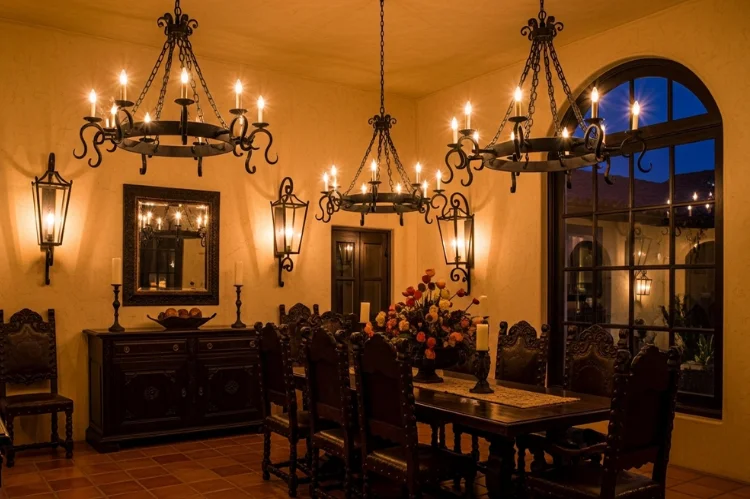
Illumination makes the interior design spaces in Spain look amazing by portraying them as extraordinary. Wrought iron chandeliers which have candle style bulbs produce romantic effect in dining rooms and entrance ways. Corridors are illuminated by warm pools of light cast out by wall sconces. Lantern style pendants are perfect in the kitchen islands and dining tables.
Recessed lighting should be avoided in actual designs. The medical impact wholesomely opposes the Spanish style home decor. Rather, diffuse several sources of light in rooms at different levels. Task lighting is given by table lamps which have ceramic or wrought iron base. In the case of outdoor spaces, consider rustic outdoor lighting, in gazebo lighting ideas.
Mistakes I Have Seen (and How to Avoid Them)
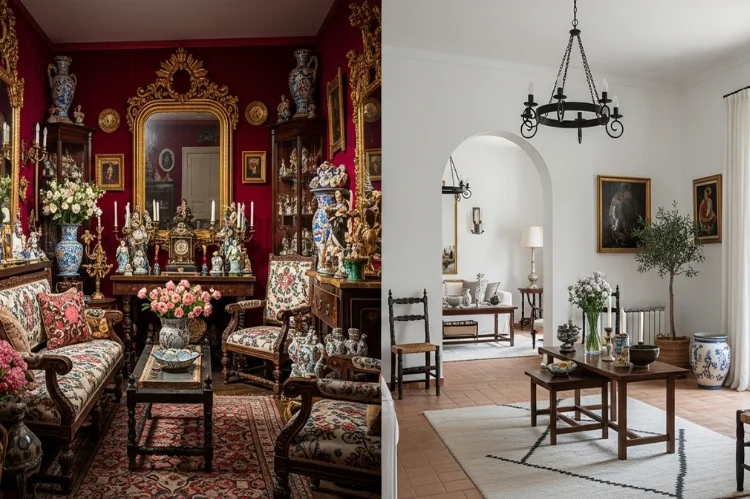
The greatest error in Spanish modern interior design is the excess in the Southwestern or Mexican folk art. Real Spanish style is restraining and curating. The other mistake is the inappropriate use of unnecessary arches and proportion. There are too many arches, which are overwhelmingly chaotic to look at. The third issue is the selection of mass produced tiles in favor of the hand crafted ones.
I also observe people not paying any attention to outdoor areas at all as it is pointless. Spanish house designs do not consider the courtyards, patios, and gardens as after-thoughts of living spaces. Lastly, do not paint stucco in bright white. Whites whose voices are warmer are more authentic. To assemble the outdoor kitchens that does not have frequent mistakes, visit outdoor kitchen with wrought-iron accents in outdoor kitchen ideas.
Budget Considerations I Wish Someone Had Told Me Earlier
The cost of construction of Spanish style mansion varies so much depending on the materials and detail. Standard constructions cost between 150 and 200 per square feet. The mid range projects are priced at between 200 and 275 per square foot. High end custom homes are between $275 to 350 or more a square foot. The overall construction cost in the case of Spanish homes is normally 15 to 30 percent higher than the normal construction cost.
Premium includes such specialized materials as clay roof tiles, custom wrought iron work, hand painted tiles. Nevertheless, these investments are dividend in form of longevity, attractiveness, and resale after decades. When it comes to Spanish home interior on a small budget, it is best to focus on the genuine materials in highly visible zones and resort to quality imitations in other areas in a strategic manner.
Frequently Asked Questions About Spanish Style Homes
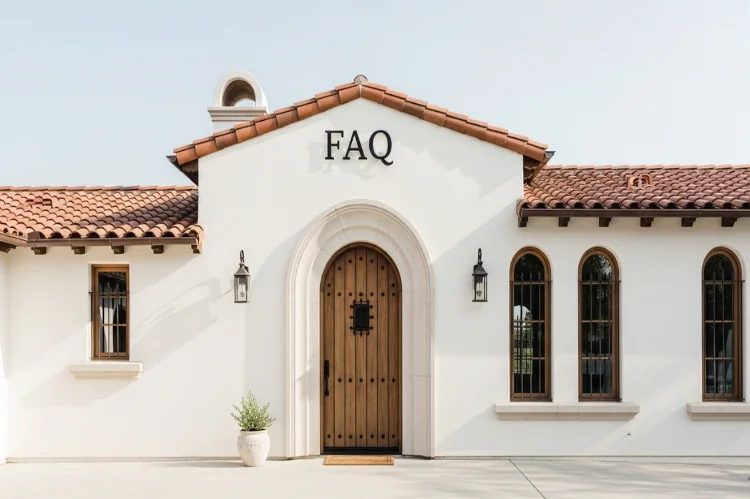
What is Spanish style architecture?
The Spanish style architecture entails Spanish Colonial building, Spanish Revival building, Mission Revival building, and Mediterranean influenced buildings. Major characteristics are stucco walls, roofs made of red clay tiles, arched doorways, exposed wooden beam, wrought iron ornamentation, and inner courtyards. The style was Spanish in origin and popularized following the Panama California Exposition in 1915 in San Diego.
Where are Spanish style homes most common?
The Spanish style homes are concentrated in California (Los Angeles, Santa Barbara, San Diego), Florida (Coral Gables, Palm Beach, St. Augustine), and the Southwest (Arizona, New Mexico, Texas). These areas have similar climates of Spain and of very strong Spanish Colonial past that can be traced back centuries.
What is the difference between Spanish and Mediterranean style?
The style of Spanish interior design is directly based on Spanish Colonial and Revival styles having austere and mission-inspired ornamentation. Mediterranean Spanish interior design is wider and includes Italian, Greek and French Riviera designs with richer details with Venetian influences everywhere.
Why do Spanish style homes have red tile roofs?
The features in Spanish houses style include red clay (terracotta) tiles due to their ability to reflect sunlight, their outstanding insulation properties in hot climates, durability against fire, and handling of water runoff due to their unique S-shaped design.
What are Talavera tiles?
Talavera tiles are ceramic tiles painted by hand that were created in 16th-century Spain. In 2019, they were included in the Intangible Cultural Heritage list of UNESCO. The traditional colors are cobalt blue, yellow, orange, green, mauve and black. The time of production is 3-6 months per item. They are needed to complete the true Spanish colonial interior design.
How much does it cost to build a Spanish style home?
Modern Spanish house construction is priced at $150 to 200 per square foot, 200 to 275 per square foot and 275 to 350 and above, respectively, when it comes to regular Spanish construction, mid-range construction and high-end construction. Specialized materials such as clay tiles, wrought iron and hand-painted ceramics normally contribute 15-30 percent to the cost of ordinary construction.
Can I modernize a Spanish style home without losing character?
Yes absolutely. Modern Spanish style interior design preserves aspects of design such as arches, beams and tiles and replaces the furniture, fixtures and color schemes. White walls, modern furniture, old tiles, modern fittings and modern rugs on the terracotta floors, are all effective in balancing old and modern.
What flooring works best in Spanish style homes?
Saltillo terracotta tiles are the best flooring that can be used to imbue the Spanish style home interior with their warm earth tones. Decorative tiles which are hand painted are very effective in small spaces such as bathrooms and kitchens. The floors are of wood, wide plank and dark stain, which is in harmony with the aesthetic. Avoid polished marble or contemporary large format tiles which are discontinuous.
Final Thoughts on Creating Your Spanish Style Home
Spanish style houses are eternal as they make us touch the natural materials and the sincere workmanship. These interior pictures are warm and welcoming with Spanish revival interior features to modern Spanish decor. I would advise you to begin on a low scale, maybe with hand painted tiles or wrought iron fixtures.
Whether you are on a tight budget, or you have a long way to go, you will pay off over decades with your Spanish home design choices that are truly authentic. I would be interested to know about your project in the comment section. What are the attributes most enthusiastic about including in your Spanish interior design?
Want to get more design information? ArtsyHome has all the guides on home decor you need to ensure you have ideas on how to decorate every room in your house, and outdoor areas, too.
Read Next: Home Decor Ideas to Make Every Room Feel Like You

