

My initial dark academia-inspired interior was more like a power outage after-school room, though. Wrong paint. Wrong bulbs. Genuinely grim.
So, here’s the straight dope version. What the aesthetic is, the actual paints and bulbs, by room, on a budget, and for renters. All your wrong answers, all in one place, so you don’t have to go through them.
Table of Contents
What Is Dark Academia Interior Design, Really?
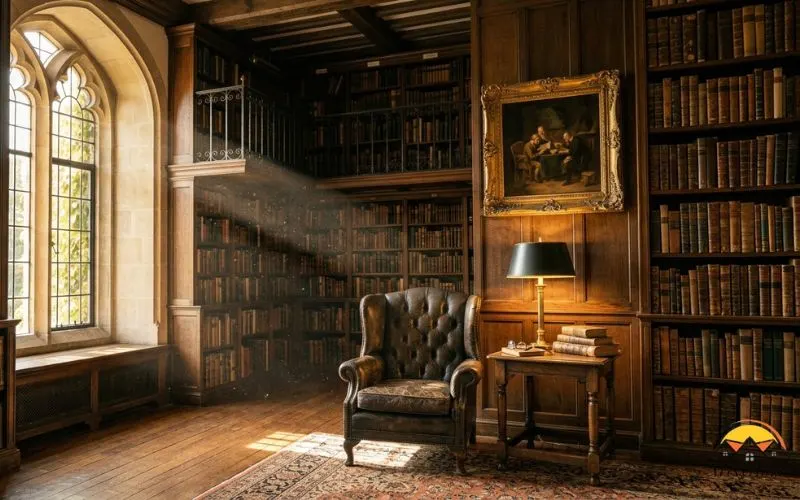 Dark academia interior design is a mood created out of old-library material (dark moody walls, dark wood, old brass, leather and stacks of real books), lit warm and low. It glorifies study, literature and old European campuses. Think a private college library you never want to leave.
The bit that most guides overlook. Not a random Pinterest palette this is. It’s based on of Donna Tartt’s 1992 novel The Secret History, which is a murder mystery set in the context of classics students at an unnamed New England college, and was inspired by other movies such as Dead Poets Society.
It appeared and settled on Tumblr in 2015, and then exploded on TikTok in 2020 when schools were closed during the lockdowns, as Vogue reported, which led to students falling in love with studying at home.
#darkacademia has accumulated billions of views today. Because it’s about a feeling, and history matters, you know that this is not a furniture-shopping trip.
What Makes Painted Windows So Special?
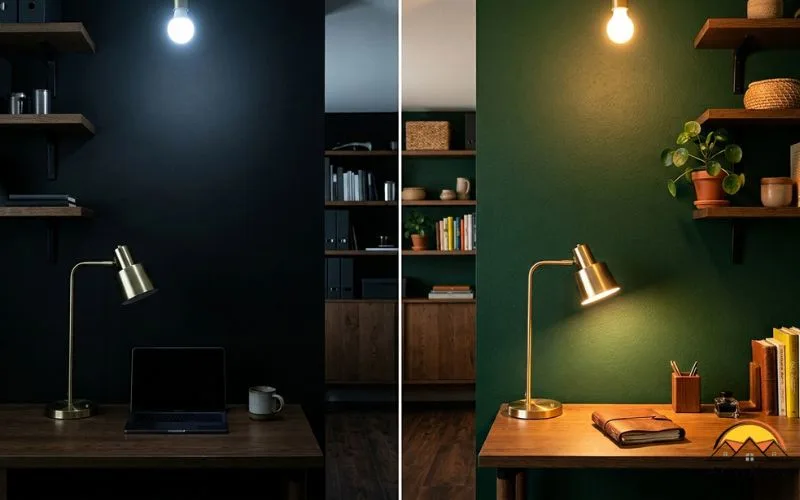 Dark academia is warm and black rooms are cold. The secret is “depth” and “warmth.” The green/black wall is lit by a 2700K bulb, which emits light, whereas the true jet-black wall absorbs the light and appears like a hole.
The other difference is soul. The Dark academia decor focuses on elements with history, outdated books with foxed spines, a globe, an oil painting in a broken frame, and a tarnished brass lamp. Not those same props bought in one shop the same afternoon. The room should sound as though it was gathered over several years, although it may not actually have been.
Dark Academia vs Gothic vs Grandmillennial
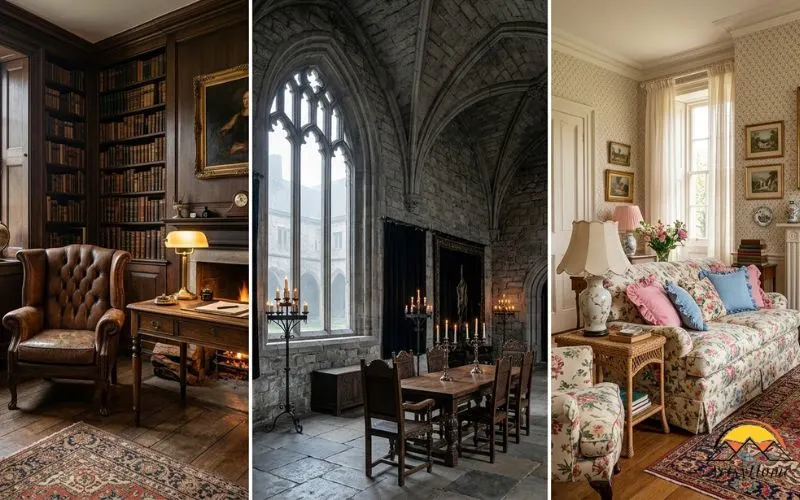 These three are mixed up all the time and that is the reason for a room being misguided. Dark academia is both bookish and cozy.
Gothic is dramatic and chilling. Granny chic meets chintz and ruffles in Grandmillennial. They are both old school lovers, but their feelings are vastly different.
This is the checklist I would have loved to have when I began, but didn’t have, and so I spent a year wondering, “Why is my library so like a vampire’s waiting room?”
| Style | Mood | Signature pieces | Palette |
| Dark academia | Scholarly, cozy, bookish | Leather Chesterfield, dark wood desk, globes, old books, brass | Forest green, oxblood, charcoal, camel, brown-black |
| Gothic | Dramatic, severe, cold | Ornate ironwork, pointed arches, black velvet, gargoyles | True black, deep purple, blood red, cold grey |
| Grandmillennial | Nostalgic, soft, granny-chic | Chintz, ruffled skirts, scalloped edges, botanical prints | Soft pastels, faded florals, warm creams |
The Dark Academia Color Palette
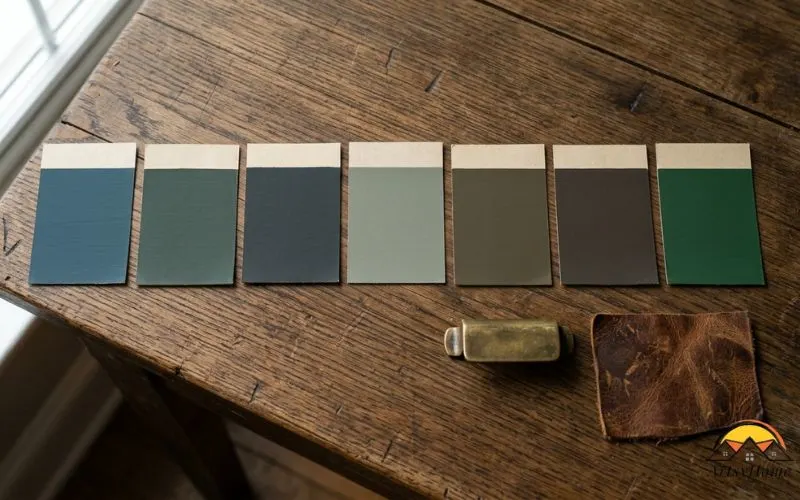 The dark academia interior design palette is based on rich, dark, muddy warm-leaning hues: forest greens, olive greens, oxblood, charcoal, chocolate brown, aged camel and inky near blacks. Ignore anything that does not feel clean, bright or cool. Colors you want are those that are like candle smoke for 100 years.
Todd’s helpful post at Aura says “go darker with warm tones,” a good idea, but when you are in the paint aisle. So here are some real codes that I would hang on a wall. These are actual current colors from Farrow & Ball, Sherwin-Williams and Benjamin Moore.
| Paint (real code) | Reads as | Where I’d use it |
| F&B Down Pipe No.26 | Blue-grey, almost storm-cloud | Studies, north-facing rooms, moody but not black |
| F&B Studio Green No.93 | Near-black green | A whole color-drenched library or dining room |
| F&B Railings No.31 | Soft blue-black | Trim, doors, a bolder-than-charcoal wall |
| SW Pewter Green 6208 | Muted grey-green (LRV 12) | The safest ‘green but livable’ pick, kitchens and offices |
| SW Urbane Bronze 7048 | Warm greige-brown (LRV 8) | Enveloping bedrooms, cozy and low-drama |
| SW Black Fox 7020 | Warm brown-black (LRV 7) | When you want black without the chill |
| BM Hunter Green 2041-10 | Deep classic forest green | Cabinetry, built-ins, a rich accent wall |
I use the old decorating rule standard that Better Homes & Gardens states so clearly in the 60-30-10 rules, which is about 60% of the main colors (walls and large furniture), 30% supporting colors (wood, leather) and 10% accent colors (brass, oxblood, a smidgen of gold). If you get the ratio of the room wrong, then it will either be flat or you will have a costume room.
I got it all wrong with browns and my mistake was to go all out on browns. Walnut floor, brown sofa, brown curtains, brown shelves. It didn’t read “scholarly”. It read “gravy.” Rip the browns with a green or an inky charcoal and everything comes into focus.
There’s a reason green anchors so many of these rooms. The green color is at the soothing midpoint of the spectrum, explaining why libraries and reading lamps have been green for more than a hundred years (the famous bankers’ lamp is green, for the very same reason).
Deep greens are synonymous with drama and calm, so they are the entire dark academia color scheme in one. If you are unsure, begin with a green. It is the most forgiving deep tone of the palette.
To Paint or Not to Paint the Ceiling?
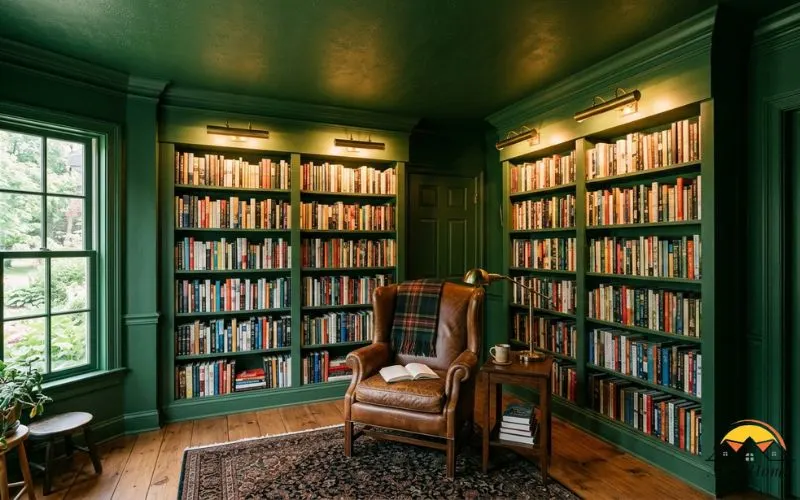 Yes, if you’re courageous, and it’s the number one most effective in the entire style. The key to converting a bold accent wall into a true dark academia room is to paint all of the walls, trim and ceiling the same shade, which designers refer to as color-drenching.
It eliminates the hard boundary at the intersection of wall and ceiling as well as the feeling of a wrap-around area like a leather book covering.
I’m fond of one real home example that a blogger did at Pine and Prospect: They took ten samples of Benjamin Moore Lafayette Green and then picked the one that they liked best. Ten. The lesson is that patience is the key. Purchase the small sample containers, apply large swatches and wait two days in the morning and evening light before purchasing even a gallon.
Light-Bright or Dark-Moody?
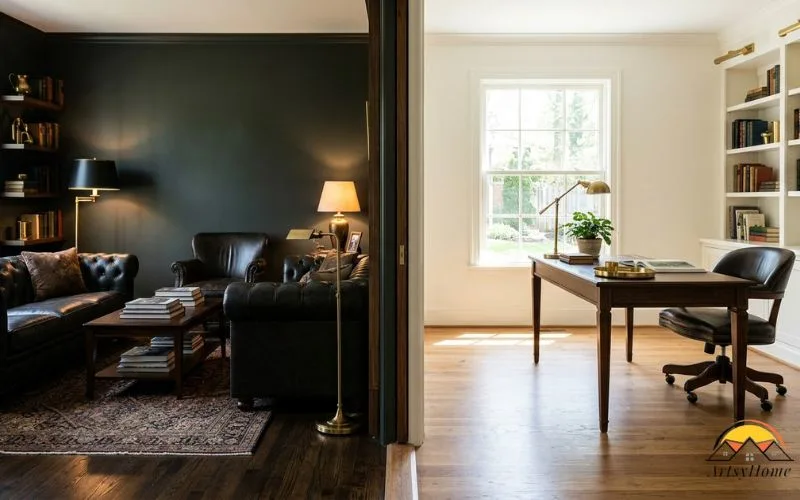 There are actually two versions of this style, and if you know which one you want, then you won’t regret it. There are basically two types of dark academia interior design.
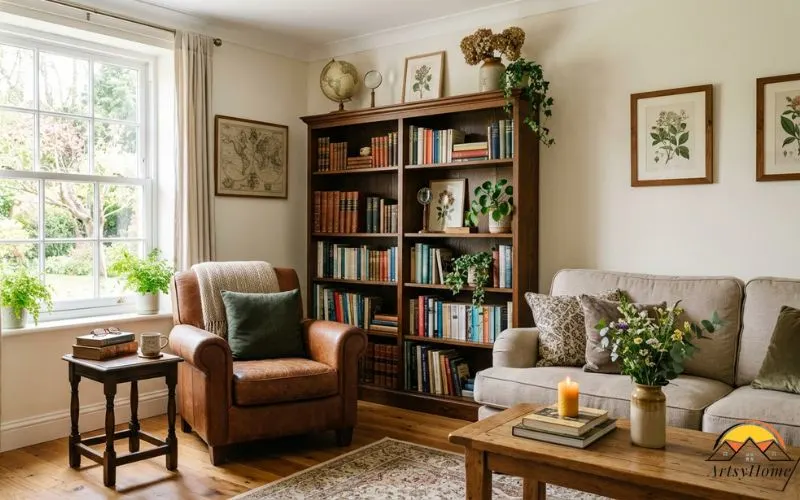
The classic one is dark-moody with drenched walls, low light, heavy furniture and everything that is a full fantasy of a candlelit library. Light bright (also referred to as light academia) retains the scholarly bones, dark wood, leather, books, brass, but places them on warm off-white or greige walls to ensure an airy room.
If you have a small space that needs to feel cozy and “cozy,” or a space that is primarily used at night, go dark-moody. If you’re in a bright open-plan flat, a rental you can’t paint dark (or just know that deep walls would send you into the depths of winter by February), then go light-bright! They’re both perfectly dark academia.
I’ve created dark-moody for a north-facing study and light-bright for a sunny living room, and they’ve been right for those rooms. Don’t push against cranky walls.
Compare the two side by side; they want really different walls, floors and light.
| Choice | Dark-moody | Light-bright (light academia) |
| Walls | Drenched deep green, charcoal, brown-black | Warm off-white, greige, soft sage |
| Best for | Small rooms, north-facing, night use | Bright rooms, open-plan, rentals |
| Light needed | Lots of layered lamps to lift the dark | Less; the walls do the bouncing |
| Floors | Dark stained wood, deep rugs | Warm mid-oak, faded lighter rugs |
| Risk | Feels cave-like if under-lit | Feels generic if you skimp on wood and leather |
| My verdict | The real fantasy, but commit fully | Safer, renter-friendly, still scholarly |
A cautionary note on dark-moody: It is either very dark or very moody. A single deep wall and everything else beige imply ran out of paint. If it is to be kept for a long time, drench the room if you commit. Half measures are what earns people a Dark Academia “looking depressing” comment. The darkness does not prove to fail, but the timidity.
How to Keep a Dark Room From Feeling Like a Cave
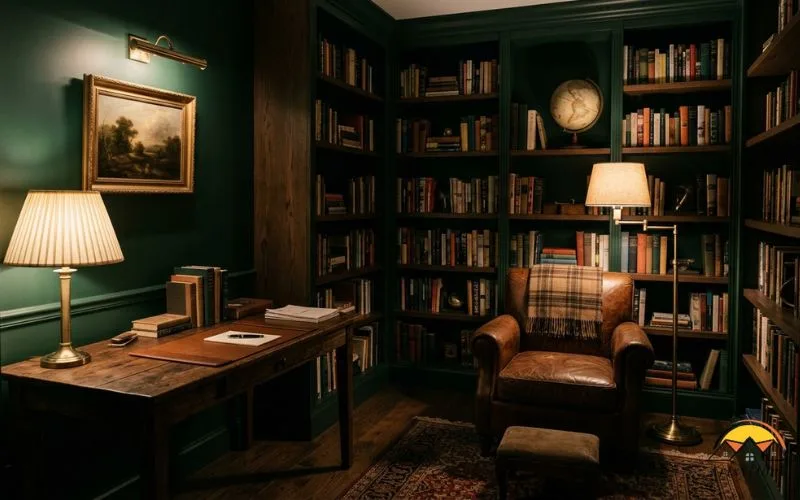 You’re not in the cave because you’re using multiple smaller warm lights, not one large overhead light; and you’re using two correct numbers: the “color temperature” 2700-3000K and the “CRI” 90+ CRI. That’s the second number no one ever mentions, and that’s why most dark rooms don’t last.
Color temperature (2700 – 3000K) is the warmth, that candle-to-sunset glow. The U.S. Department of Energy’s lighting glossary approves that the light produced by 2700K will be color warmer and yellowish, while light produced by numbers above 4,000 will be clinical and blue. But the Color Rendering Index (CRI) is a measurement of how accurately a bulb renders colors, ranging from 0-100.
The inexpensive 2700K bulb could have a CRI of 80, and the deep green may appear as pond scum, while the walnut may appear to be flat and lifeless. Lumens’ lighting experts say 90+ CRI is particularly recommended for rooms dominated by wood, leather, and art every dark-academy room ever. Buy better bulbs; spend the extra couple of dollars per bulb. This is the least expensive of all the upgrades listed in this guide.
Now the layering. My rule is in most rooms there are at least three lights that aren’t connected to the ceiling fixture. Table lamp with a pleated shade; Floor lamp reading over armchair; Little picture light or sconce. Install on inexpensive plug-in dimmers.
Most guides recommend 300 to 500 lux at a desk and I’m not a touchy-feely type, so I put a $20 lux meter on my desk to see: 450 was clinical and a headache for reading at night; I believe it was between 250 and 300 where the page was clear, and the room felt like dusk. Rather than relying on the number in the book, trust your eyes. Follow my notes on living room lighting in the following manner to stagger heights.
I blew almost a whole room full with lights in the ceiling once when I had a whole bookshelf full of books in the room, my disaster. It resembled an improvement on a dentist’s waiting room with better shelves. Flat, bright, soulless. Killed the cans and came three lamps in and the same room, at last, became a place of reading until 2 am.
Layered lighting is also a concept that’s well-supported by the U.S. Department of Energy : The suggestion is to use a collection of different light sources and lower-wattage lights throughout a room instead of just one big source, for atmosphere and for saving energy. The 2700K lights consume considerably less power than the old incandescent, making it possible to enjoy three lights guilt-free. Other rooms, however, require different levels of brightness, and that’s approximately where I’m heading.
| Room | Rough target | How I hit it |
| Reading nook / desk | ~1,000 lumens on the page | One focused task lamp, 12–16″ above the surface |
| Living room | Layered, dim overall | 3 lamps at staggered heights, all on dimmers |
| Bedroom | Low and warm | 2 bedside lamps, skip the overhead entirely |
| Kitchen | Brighter task zones | Warm under-cabinet strips + pendants, still 2700–3000K |
| Bathroom / entry | Soft, one accent | A single brass sconce or a small lamp on a console |
Just a word about candles; I love this aesthetic and so do they. Use as accents, not as primary illumination and don’t leave them burning while they are out of your sight. Candles are known to cause thousands of home fires annually, according to the National Fire Protection Association, with most occurring when the candle is too close to burning material. I use the flameless LED candles on the high shelves where a lighting flame makes me uneasy, and they do a remarkably good job of flickering.
Furniture That Reads Dark Academia
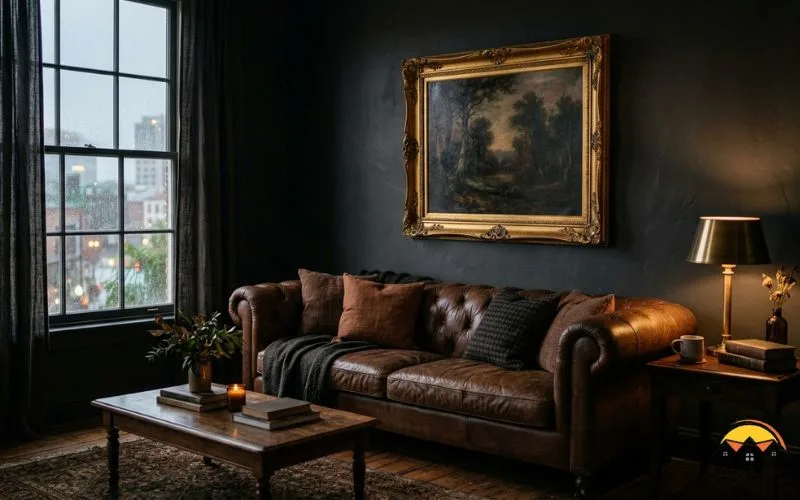 The dark academia furniture category is quite limited: a button-tufted leather sofa or armchair, a dark wood desk, tall bookshelves, a worn rug and a globe or two. 80% of the work is done by aged leather and dark wood. But don’t worry, you need not break the bank at the furniture stores when they’re trying to convince you of the opposite.
Remove the Chesterfield sofa, the quintessential signature leather sofa. It is said to have originated with the 4th Earl of Chesterfield, Philip Stanhope (1694-1773), who required a seat for himself which a gentleman could sit on without having to crease his suit. The rolled-up arms and deep tufting were Victorian shorthand for old money.
The scuffs are the look; the patina is the time of aging. The point is the age of real leather the patina, the scuffs are the look. Like unlacquered brass, raw brass (no primer or lacquer) will darken and warm up with age, and is referred to as a “living finish. You’re buying things that are supposed to wear.
Here’s the simple truth about the budget that Aura can’t tell you about: all tips in furniture stores wind up on a case goods line that costs over $2000 for Aura. Real routes and real price.
| Piece | Splurge | Save / DIY |
| Leather armchair | Restoration Hardware or a real vintage Chesterfield | Facebook Marketplace secondhand leather, $80–250, then condition it |
| Bookshelves | Solid-wood built-ins or Pottery Barn | IKEA Billy units painted dark + trim molding glued on the front edges |
| Desk | A solid walnut pedestal desk | A thrifted teacher’s desk or a wood door on trestles |
| Rug | Genuine hand-knotted Persian | A faded machine-woven ‘vintage look’ rug from Ruggable or a thrift store |
| Lighting | Antique brass sconces | Thrifted brass lamps + 90+ CRI warm bulbs (the bulbs matter more than the lamp) |
I would fight for the Billy-bookcase hack! Three tall IKEA Billy units in a deep green, glued slim trim molding along the front edges and a strip of picture lights on top; they look like built-ins from across the room but at 10 times the cost. I’ve done it twice. No one has ever guessed where the ‘Cyclades’ is located.
Before loading those tall shelves, there’s one piece of bad news: you need to anchor them to the wall. Furniture and TV tip-overs are a major cause of injury in the U.S. consumer product safety (CPS) system, resulting in thousands of emergency room visits annually, according to the U.S.
Consumer Product Safety Commission (CPSC). If you have children or pets, then an anti-tip strap is non-negotiable, particularly for a $6 price tag. After a close call on a swinging full bookcase and a very frightened cat.
Which Woods and Metals Actually Read Dark Academia
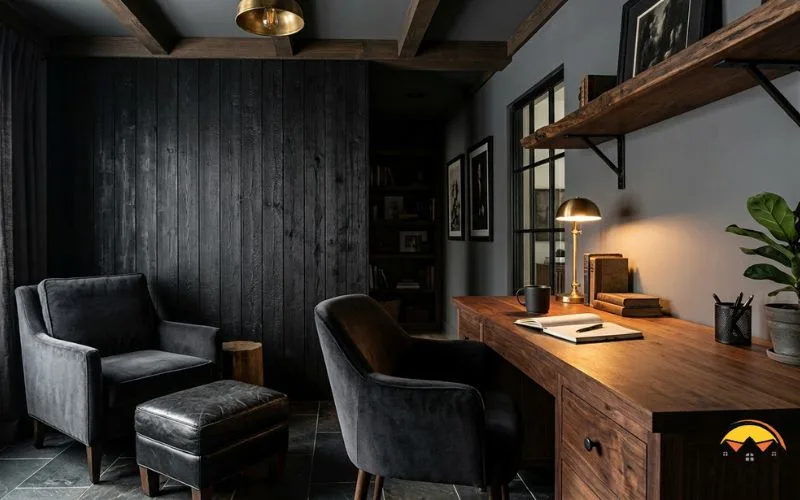 Woods with this appearance include walnut, mahogany and dark-stained oak and don’t assume they’re all built to the same standard. White oak is rated at about 1,350 lbf on the Janka hardness scale (the industry standard test for resistance to denting); walnut is rated at 1,010 lbf; and real mahogany is rated at 800 to 900 lbf.
Even softer mahogany can’t handle the day quite as well as walnut and oak can. For a desk, I save for holding up walnut or lean oak, but mahogany I only use in cases where it’s being looked at, rather than worked.
The bottom line for metal is: opt for older finishes. All of the brass items are un-lacquered and aged bronze, and the blacked-out iron is very dark, but all of these look better with age, the whole dark academia thing.
Mahogany was the most highly sought-after furniture wood of the 1700s and 1800s, partly, reports Encyclopaedia Britannica, because it doesn’t warp. Efface shiny chrome and polished nickel features completely. They’re too sanitized, too contemporary, and they battle everything else in the room.
There are wrinkles to know about for both stone and leather. For counters or a table top, I prefer a honed (matte) dark marble or soapstone that will not polish or shine if acid gets on it, and which will not scuff with a wine or lemon splash, so I don’t worry about a ring on it.
Full-grain and aniline leather are less sanded and give the best patina over time, while corrected-grain and bonded leather remain flat and eventually flake off. When purchasing 1 leather item to last, purchase 1 full-grain second-hand leather item over a new bonded leather item every time. Quick material scorecard.
| Material | Choose | Skip/watch out |
| Wood | Walnut, oak, dark-stained ash | Soft pine, orange-toned modern stains |
| Metal | Unlacquered brass, aged bronze, blackened iron | Chrome, polished nickel (too clean) |
| Stone | Honed dark marble, soapstone, slate | High-polish; marble etches with acid |
| Leather | Full-grain, aniline (patinas beautifully) | Bonded/corrected-grain (peels over time) |
| Textile | Wool, velvet, tweed, heavy linen | Shiny synthetics, thin poly-cotton |
Laying Out the Room
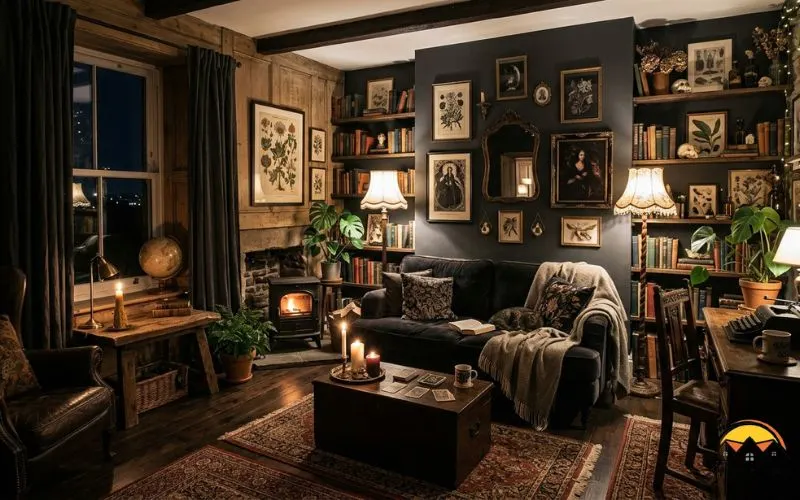 A dark academia room requires one focal point and some feeling like it was designed around how you read, how you sit, and how you do it, rather than how you would like it to look, and not purely how you want to hang it against the walls.
The starting point to any good dark academia interior design will always be the anchor pick it first, whether it be a bookcase wall; a fireplace; a large window desk; or something else great, then face the seating toward the anchor. Usually, the rooms that don’t have something or someone to focus on have nothing to sit around, no furniture, in the middle of the room.
What I had been doing for years, which was a layout error, was laying everything flat against the walls; thus, my home lacked any kind of middle area where I could fit item sets, and there was no cohesion, nothing. Retract the seating into the room. Use two chairs to create a reading corner, as they will float off the wall.
Maintain a 36′ path to walk through a room and consider areas: Reading corner here, desk corner there, drinks corner by the shelves. Everything is anchored around one focal point and its well-groomed little clusters that make the difference between a room that’s been styled and a furniture warehouse.
Dark Academia Room by Room
The looks vary from one job to another. A study requires focus, a bedroom requires envelopment and a kitchen requires a few honest signals. Here are how I would have treated them all without turning the whole room into a dark hall.
The Living Room
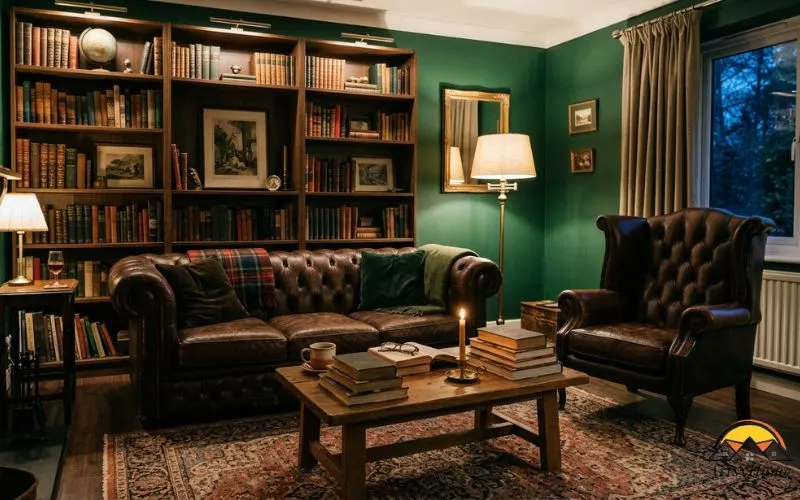 One thing that really hinges a dark academia living room is a leather sofa or a couple of tufted armchairs, facing one another, and behind it a bookshelf. That’s the whole shot- add a worn rug, a low wood coffee table with lots of hardbacks and a floor lamp reading over the seating.
Do not paint all walls a black color. Keep the color of the wall the shelves are against two or three leather or deep velvet seats and add two or three lamps.
Just a few figures to keep you from having too much trouble: leave approximately 36 inches of walking space around the main path, and purchase a large matted rug at least the front legs of the sofa and chairs need to be on it (in most living rooms, that means at least 8 x 10).
The short version of my living room ideas is: One dark feature wall and some warm lamps overpower four black wall combinations, hands down.
The Bedroom
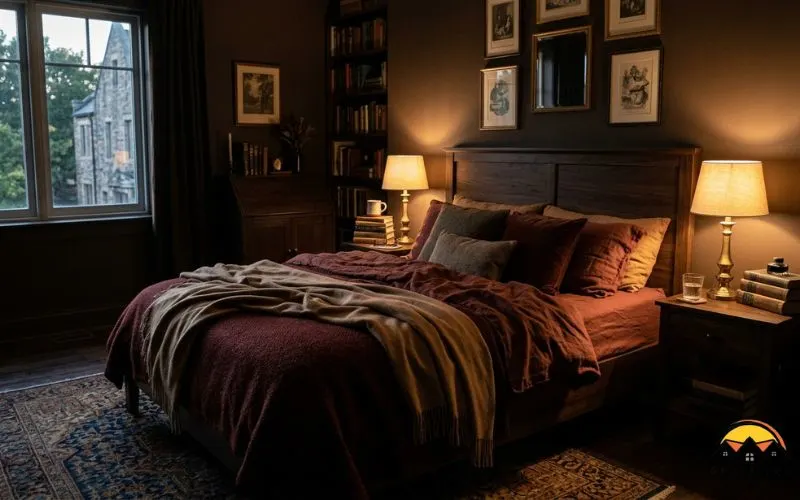 Dark academia is easiest at the bedroom dimensions, and the actual woman wishes a casing right here. A pair of deep enveloping walls (Urbane Bronze are my favorites), a wood or upholstered headboard, cozy layers of linen and wool, an assortment of books on the nightstand and a warm light.
Unlike in the rest of the house, you don’t have to work on details in bed, so this is an opportunity to make it a darker room. If possible, avoid overhead lights altogether, and use dimmers for the bedside lamps. Rug tip: If you want that warm landing strip for bare feet on your queen bed, then use an 8×10 with it under the bed;
a king-sized bed calls for a 9×12. View my bedroom setups on headboard ideas that doesn’t require a bedroom renovation.
The Home Office or Study
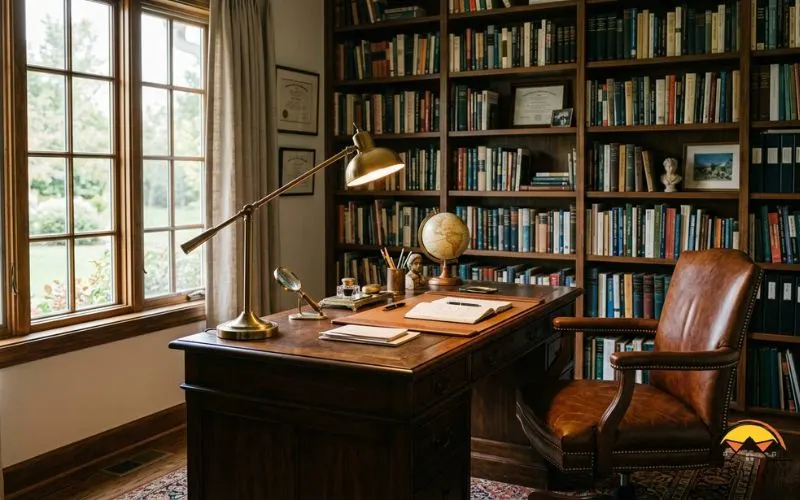 It’s the heart of the entire look, and the one that is treated with the most degree of work. Dark wood desk, good reading chair, wall-to-wall books, good globes, desk lamp-braised. But, much like with anything in dark academia, there is one and only one point of conflict: mood lighting vs focus lighting.
Light 2700K, pretty hot, very bad for real concentration. So I try to make the room airy with lights, and add a one-purpose desk lamp about 12-16 inches above the desk, angled to the side of my dominant writing hand, so that it doesn’t cast a shadow. About 1,000 holes in the page. Spending their time in a serene atmosphere all around.
The height of the desk is crucial: If it’s wrong, you will not be able to enjoy the room, regardless of how nice it might appear. According to Cornell University’s ergonomics guidance, the desk should be about 25-29 inches high depending on height; the screen should be level with your eyes and elbows should be level or slightly above 90%.
If you have a beautiful old desk that cramps your neck, it’s a bad desk. Try to get a surface of about 28–30 inches; you’ll need room for a lamp, a laptop and an actual open book. See my home office page for more desk/chair details.
The Kitchen
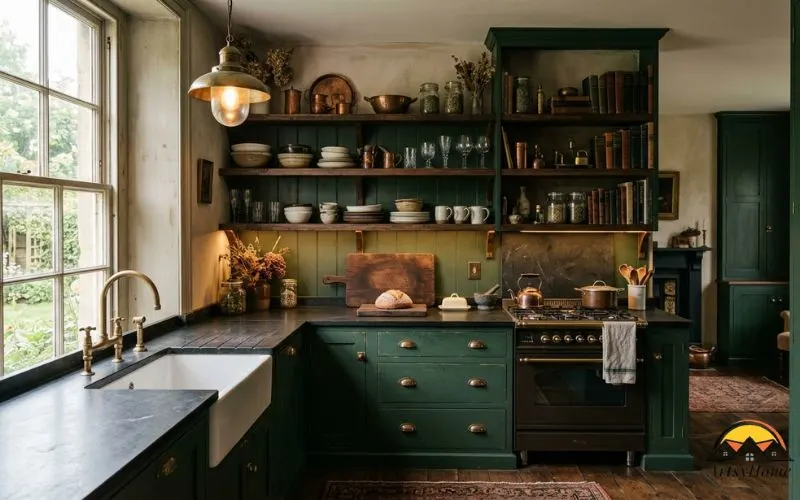 A few tricks will make sure your colourful kitchen sells quickly: painted cabinets (deep green or close to black), unplated brass or old brass hardware, open wood cabinets and warm lighting (no simple kitchen daylight). It is closed by butcher-block or dark stone counters.
This is what the Pine and Prospect home did: Lafayette Green cabinets with warm brass pulls and the dramatic contrast of the brass against the rich green to complete the statement. It is not necessary to clear the space first. It is not a renovation but cabinet paint, new hardware, and new cabinet doors.
The Dining Room
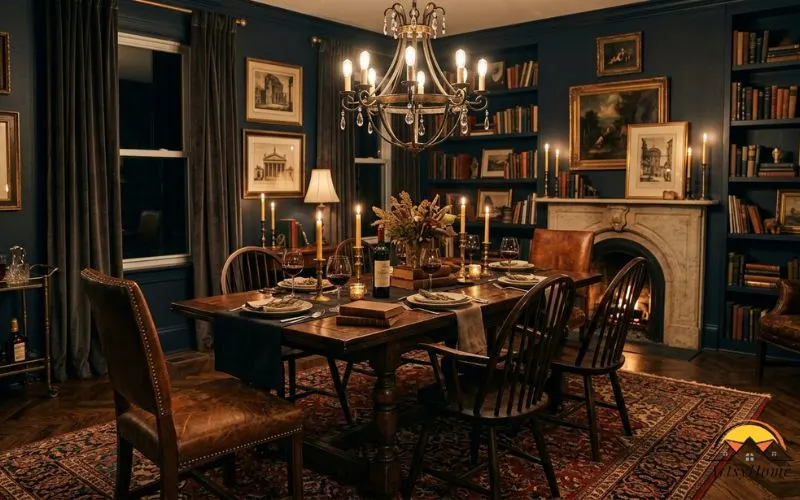 One of the biggest looks in all of the house is a dark academia dining room, as eating is the whole fantasy under warm low light. Elaborate walls, a sturdy wood table, assorted wood or leather chairs, an actual statement light above, and candles playing actual roles. The chandelier is indispensable in this one room.
Two numbers prevent it from “hungrifying”: the “pendient” (chandelier) is about 30-34 inches from the table top, and it should be about half to two-thirds the width of the table.
Set it on a dimmer, of course. And leave approximately 36 inches of space behind each chair for them to get up from. In my case, it was a rug that ended short of the table edge and thus all the pulled-out chairs got stuck.
Make the dining rug large enough so that when you push back chairs, they will remain on the rug, which is typically at least 24 inches wider than the table on each side.
The Bathroom and Entryway
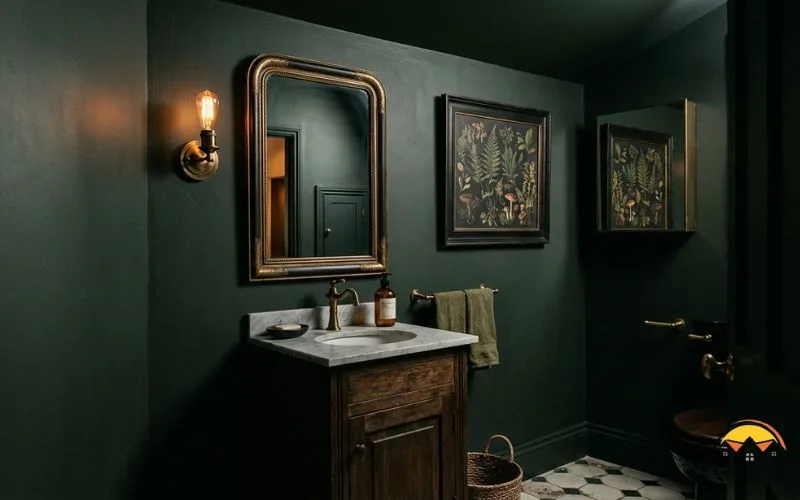 Isn’t it time you were daring in the smallest room, and most people are the most cowardly and most timid in the biggest room? If you have a powder room or entryway, you can color-drench in Studio Green or inky charcoal since it’s only a few minutes there and drama equals comfort.
Pair with an antique-style mirror, one brass sconce and a moody botanical print. An entryway is the front door of the house and will help set the tone for the rest of the house the moment people walk in the door. Dark wall, vintage range, a little lamp on a console, possibly an antique framed map.
When mounting sconces on either side of a mirror, install them at about 60 to 66 inches from the ground, which is eye level, in order to make them look good, instead of making your eyes look bad. A small footprint with a big first impression.
Art, Mirrors, and Wall Decor
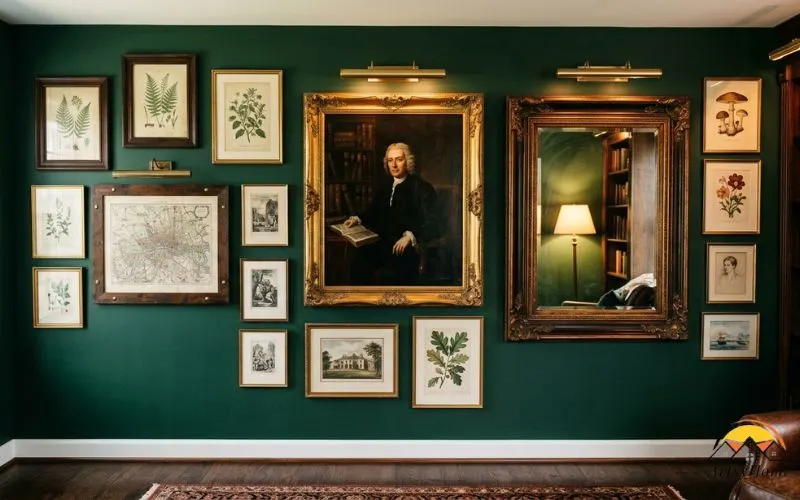 Dark academia walls prefer oil paintings and old portraits, botanical or anatomical prints, antique maps and heavy framed mirrors, hung somewhat densely and invariably in old or gilded frames. Ignore glossy, simple, or shiny, new items. The wall should feel like a study that’s been added to over decades, not a gallery hung in one go.
The worst error that is made is hanging art too high. Museums hang art at a center line of 57 to 60 inches above the floor and this is what you must steal. Position the middle of this piece at about eye level (not high up in the ceiling as I initially did).
When hung over a sofa or console, the art should be approximately two-thirds the width of the furniture, with the height being 6-10 inches above. This is my handy dandy size guide.
I didn’t make up that 57-inch line it’s the standard size for galleries, and design magazines such as Architectural Digest echo it since it positions work at an average eye level. Thief the museum hack and your walls will be thought out but not coincidental.
| What you’re hanging | Size / height rule | My note |
| Single piece on a bare wall | Center at 57–60″ from floor | Eye level, not ceiling level |
| Art over a sofa or console | ~2/3 the furniture width | Float 6–10″ above the piece |
| A gallery wall | Treat the whole cluster as one shape | Keep 2–3″ gaps, mix frame sizes, one dark theme |
| A statement mirror | Big and off-center, near a light source | Reflects lamplight and fakes more depth |
The Layer That Sells the Whole Look
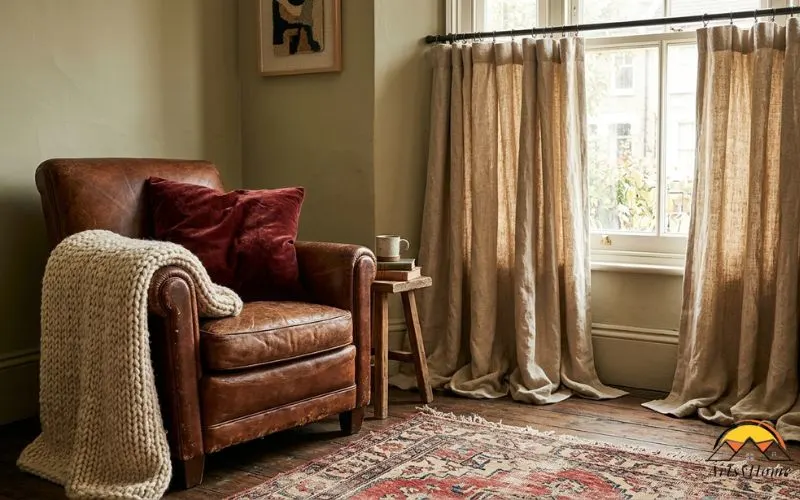 Dark academia extends its range of painted rooms to rooms you want to sink into, specifically soft materials in hues of oxblood, forest, camel and charcoal. Pattern is not as important as texture here.
A worn wool throw and a velvet cushion are more useful than wallpaper. Not only does Wool look good, but it’s also a smart choice too: The Woolmark Company says wool’s naturally durable and flame-resistant, a reassuring quality in a room full of lamps, candles and books.
Curtains are the most underrated and the most common mistake I see is obtaining incorrect dimensions. Hang high and wide, 4-6″ clear of the window frame (or halfway to the ceiling for drama) and 8-12″ extended beyond each side, to make the window larger and wrap drapes around the window rather than around its perimeter.
It should be just touching the floor or puddle, not ripping above like the flood pants. I recall the first time I rented a room I had short and skimpy curtains, pretty basic, until I fixed just this one. Rug sizing also catches out people; here’s the quick solution.
| Element | Rule of thumb | Why it matters |
| Curtain height | Rod 4–6″ above frame, or mid-wall | Draws the eye up, makes the ceiling feel taller |
| Curtain width | Extends 8–12″ past each side | Window reads wider; drapes frame, don’t cover |
| Curtain length | Kiss the floor or slight puddle | Floating panels look like flood pants |
| Living room rug | Front legs of all seating on it (8×10 min) | Anchors the seating into one zone |
| Dining rug | 24″ past the table on every side | Chairs stay on it when pulled out |
How to Style the Bookshelves
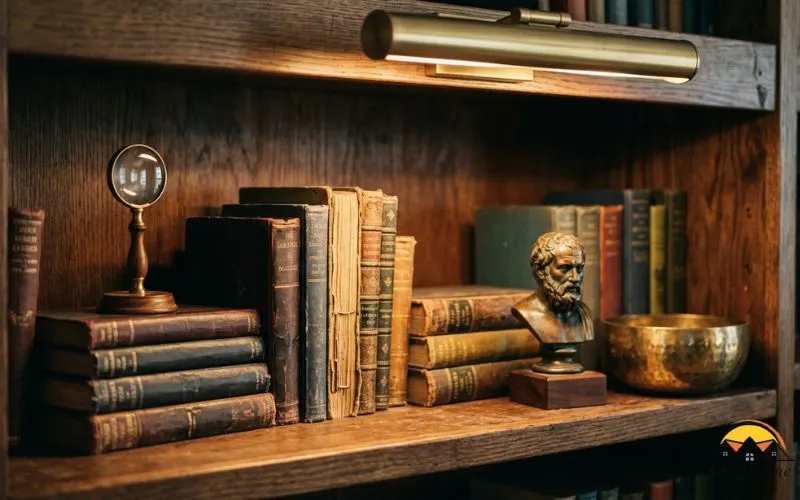 Dark academia shelves are done by alternating the vertical and horizontal book placement, creating intentional gaps and alternating between a book stack with a few items in between: a bust, a small brass bowl, a stack of books with a curio in it. The aim should not be a library that appears to be a showroom with all spines turned to the rainbow. The books in the “book section” should be in rainbow order so you can quickly end the fun.
When you’re picking up what you consider to be old books, treat them a bit better. The Library of Congress recommends that books be kept away from the sun and from wet and that they be properly supported when shelved, so that the spine will not warp. This weathered disturbed finish is beautiful, but direct sun damage will destroy a book in a couple of years. Don’t put the pretty ones on the windowsill. I had a beautiful cloth-bound copy from the 1940s and I regret it since it sat on a sunny shelf.
How to Get Dark Academia With No Paint
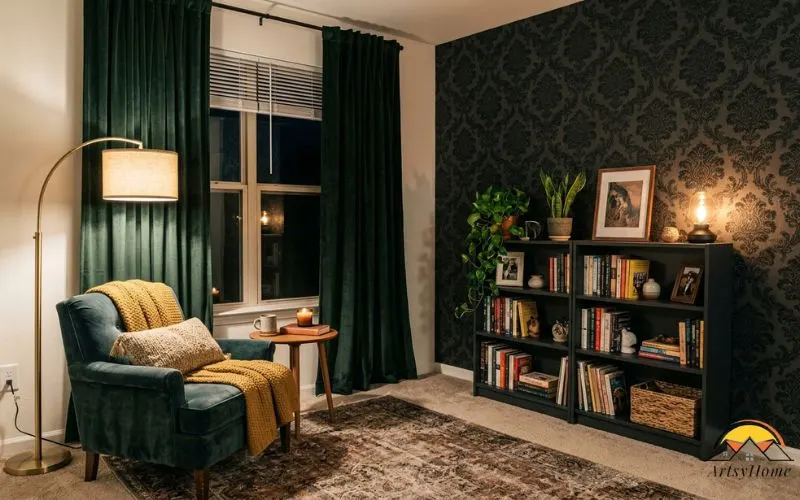 The look is complete with no paint when textiles, furniture, books and lighting set the tone for the space with no walls getting in the way, and with truly removable products for the remainder. Renters are basically left high and dry by each “how to” book on this subject, including Aura’s booklet, which assumes they can build millwork and own it. No need for that!
A feature wall is covered by peel-and-stick wallpaper in a dark damask or a removable moody mural, and it can easily be removed when the time comes to move. Bookshelves fixed on the wall that don’t even touch a stud, it’s the Billy again! High, wide, deep velvet curtains do more than paint to dress a room; they stay on hand at the next house.
Next, the easy changes: replace any cold ceiling bulbs with warm 2700K bulbs (put them in a drawer for when you move out), add three lamps, place a worn rug everywhere it can be placed over beige rental carpet, and stack real books everywhere. Every picture I took of my flat had the walls painted that dark and had the exact color of academia, only because of the lamps, leather, curtains and books…I rented the flat through my landlord and they were all dark academia. Deposit fully refunded. More tricks that can be removed without damaging the ship are listed on my DIY page.
Making It Work in a Small or Low-Light Apartment
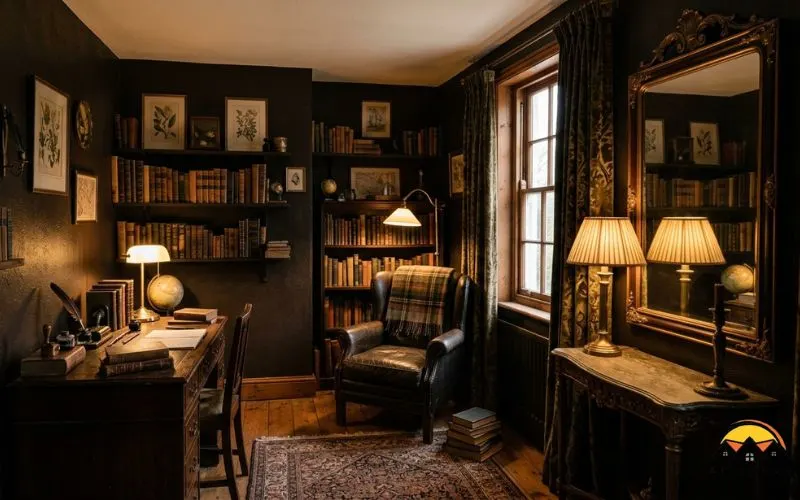 Dark colors DO indeed look good in small, low-light rooms, and the dark/white truth is that dark, small rooms are actually more welcoming than white, small rooms. Without light, white rooms desperately looking for it look grey and sad. A dark room does not fight and has no fear of it.
For low light: select colors with warm tones (gray, brown-black, muddy green—no cold grey), and choose eggshell or satin sheen (not dead flat), so that the tiny amount of light that is allowed to enter reflects just a little.
Position your darkest value against the wall that faces your window and have the light run down the wall from the window, not through the window. Then, in a low-light room, get used to the layered warm lights from before: In a dark room, your lights are the sun.
The mirror trick that actually works: install a large antique-style mirror on a side wall, not across from the window, but next to it to diffuse the light the window provides, but not ruin the effect. Stay on the ball and stick to the palette. Three shades of color, in a small space, is clutter, and clutter makes dark academia look like a junk shop.
Dark Academia Checklists:
If you don’t do anything else, strike these six things, and any room will be Dark Academia, entire home or just a rented corner. It’s the order that I would work through it in from the lowest to the highest return.
- Warm bulbs first. Swap every cold bulb for 2700–3000K, 90+ CRI. Cheapest change, biggest difference.
- Three lamps, no overhead. A table lamp, a floor lamp, one accent light. Kill the ceiling fixture.
- One dark surface. Paint a feature wall, or hang removable dark wallpaper, or wheel in tall dark bookshelves.
- Real books, stacked and shelved. Thrift them by the bagful. Mix vertical and horizontal, skip the rainbow order.
- Leather or velvet seating. One good secondhand leather chair beats a whole new suite.
- Aged metal and old curios. A brass lamp, a globe, an oil painting, a mirror. Odd numbers, eye level.
This is the standard formula. The following are Walk-In User Guides for each specific room, in the “Shop In An Afternoon” format.
| Room | Grab these | One splurge worth it |
| Living room | Leather sofa, floor lamp, big rug (8×10+), books, coffee-table stack | A real leather Chesterfield |
| Bedroom | Two bedside lamps, upholstered/wood headboard, wool throw, layered linen | A solid wood headboard |
| Study | Dark wood desk, task lamp, reading chair, globe, wall of shelves | A pedestal or roll-top desk |
| Kitchen | Dark cabinet paint, brass pulls, open wood shelf, warm bulbs | Aged-brass tap or hardware |
| Dining | Wood table, chandelier on a dimmer, candlesticks, rug 24″ past table | A statement chandelier |
| Bath / entry | Dark drench, brass sconce, antique mirror, vintage runner | An ornate vintage mirror |
How to Actually Maintain Dark Walls
 No one tells you how to maintain it; here it is. You will find that almost any shade guide for dark academia interior will not list as a “must-have” element: dark walls trap dust and all unlacquered brass goes blotchy, and leather scratches.
There are no drawbacks to living with it once you know the tricks, but it’s not a thing you want to take a chance on. This is what the shopping guides don’t pay any heed to because it doesn’t sell furniture.
The most surprising thing is the dark-wall dust thing. The deep matte green wall exhibits fingerprints and dust in raking light that a white wall could never do. The solution: eggshell or satin on dead flat on high-touch walls, and a microfiber dust mist weekly.
Cleaning is not done on brass with a shiny finish the whole point of brass is the patina—and if it turns truly soiled, a cut lemon and a little salt, then rinse rapidly and dry it off, is the only thing I ever do to my brass. My honest care cheat sheet.
| Material | What goes wrong | What I actually do |
| Dark matte walls | Shows dust, scuffs, fingerprints | Satin not flat on high-touch walls; weekly microfiber dust |
| Unlacquered brass | Goes blotchy, then dark | Leave it (that’s patina); lemon + salt only when grimy |
| Aniline leather | Scratches, water rings, fades in sun | Condition twice a year; keep out of direct sun; blot spills fast |
| Honed marble | Etches from wine, lemon, coffee | Coasters and trays; pH-neutral cleaner only, never vinegar |
| Velvet | Crushes, shows every hair | Steam the pile back up; lint roller weekly if you have pets |
The one I underrated: Pet hair on a charcoal velvet sofa is a diabolical full-time job. I love the sofa. I have also got 3 lint rollers. For dogs who shed, dress them in leather in the high-shedding areas and give velvet to the dog beds you can clean and shake.
The Mistakes I Made (So You Don’t Have To)
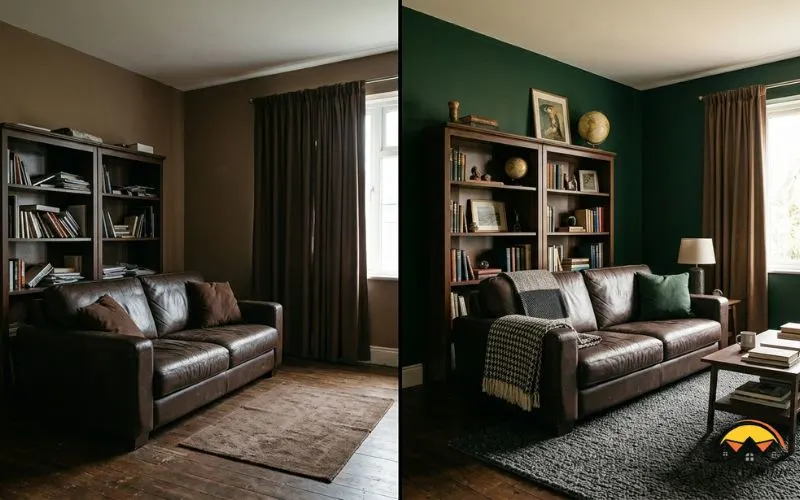 The all-brown room. It’s the most typical fallacy and I said it before, but it will have to be said again. Any combination of wood tone and no contrast makes “scholarly” become “soggy. It gets instantly saved by one green or charcoal piece.
The cold overhead bulb. For months I’ve been asking myself why my room, which I referred to as the green room, seemed so sterile. It was a 5000K bulb, and a small Interrogation lamp in the ceiling.
The fake books Every time I got them. I bought a set of hollow decorative “books” and every time they turned out to be as hollow as they looked. The real old books are just a little less expensive and have genuine spines and titles. People can tell.
All furniture legs off it, and the rug is too small and floats in the middle of the floor like a stamp. Choose the rug so that the front legs rest on it. The big one: over-styling. If all the surfaces are filled with globes and busts and candlesticks, they lose their collected look and appear staged. Edit. No matter: blank space is OK. The difference between scholar’s room and prop room is “restraint.
Who Should Skip Dark Academia
 Dark academia is not for everyone and I would rather say that to you than to sell you a room full of crap you’re going to hate. When choosing dark academia interior design, the fundamental concept is honesty.
If you want to be in bright, sunny and airy rooms where you feel awake and happy, the walls can certainly drag you down, particularly in the sad time of the year we know as grey winter. There really is scientific truth to that, and there’s no room for being down in your own house.
If you’re any of the following, consider skipping the full dark-moody style: you rent and can’t make any changes to the lighting or install any lamps at will; very little light comes in and there’s no money for wonderful layered fixtures; you suffer from winter blues; or you just prefer a more minimalistic and bright room.
The happy news is that it is not cave-bright, but light-bright (light academia), the wood and leather are stored against pale walls, and the books are kept on the shelves and that’s it; you get the scholarly soul without the cave risk. I’ve guided more than one person on the path of light-brightness when they said that they were feeling uneasy about the dark version, and each time, it was for the best.
Is Dark Academia Still Worth Doing in 2026?
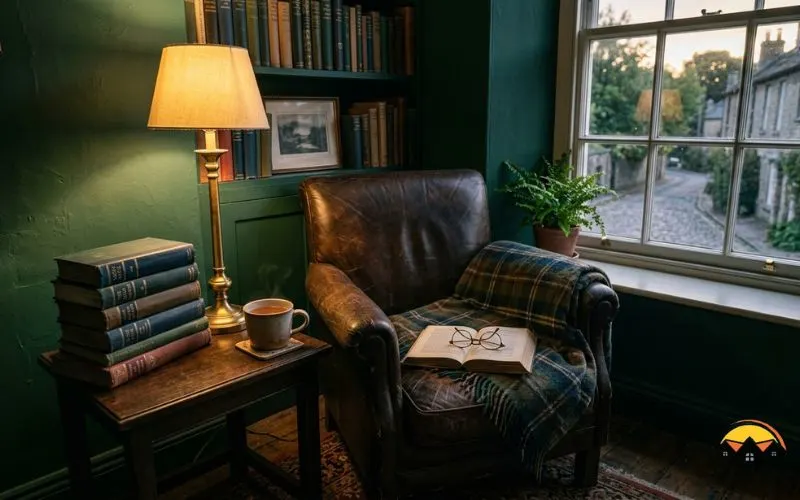 Yes, and it’s maturing into a trend that will not soon fade away. It was hailed by Architectural Digest as the “one microtrend that isn’t about to fade away” and is said to have such a long shelf life that Cottagecore and the other microtrends couldn’t compete.
As designer Jessica Bennett wrote in that piece: The Harry Potter generation is in the market for houses today and you can add some magic, a bit of escape, to a room with this look.
The following numbers support this. Pinterest’s 2026 trend forecast has dark academia taken over by “Poetcore,” which, according to the company, is seeing a combined 175% increase in search.
Dark academia is being replaced by “Poetcore”, and searches for the poet aesthetic increased by around 175%, according to Pinterest’s 2026 trend forecast. Meanwhile, Pinterest says its predictions have been roughly 88% accurate over the past six years. My honest opinion?
A dark academia home exists because it’s made from things that are very old (and very beautiful things too: leather, brass, books, wood, that will be beautiful for another 100 years after TikTok). That’s not a trend. It’s a tasteful, moody shot, really.
Quick Answers to Questions Most Guides Skip
What is the 3-5-7 rule in decorating?
The 3-5-7 rule echoes the idea that odd numbers, specifically 3, 5, and 7, add a natural movement and dynamism to a group of Decoratives; even numbers add a static, staged sense.
It’s the way you decorate a shelf or mantel in a dark academia space: Pack a shelf with a stack of books, a small bust and a candlestick in a trio of three, or in larger numbers 5 or 7 for longer surfaces.
Adjust heights of individuals in each group for movement of the eye. A minor little rule that will solve a lot of why does this shelf look off? issues.
Is dark academia expensive to do?
But no, not required and one of the less expensive looks to fake well. Two items are most expensive to read, and they are the cheapest second-hand.
The two items are: leather and old books. When a chair is on Facebook Marketplace and has been used, it’s richer than a new chair for $800, because after all this is what the marketplace is for.
The inexpensive price of paint, the fact that these lamps can be found everywhere, and the painted IKEA Billy bookcases replace built-in bookcases. The only thing I would spend real money on is bulbs: 90+ CRI warm bulbs. All the other can be picked up.
Can dark academia exist in a light-hearted, contemporary apartment?
It works, but you don’t copy the entire moody template. This is a lighter side of this darker side – it is a modern version of dark academia, but with less of the dripping wet effect; the same elements, leather, dark wood, brass, books, layered lamps used in conjunction with your lighter walls.
It is sometimes referred to as light academia and it’s not a cop-out; it’s legitimate. Even the dark wood shelves and the leather chair behind a warm, off-white wall look very academic. The modernity is retained while the spirit of the old is conveyed.
How many lights are needed for an “at night” theme?
Use at least 3 light sources in each room, and as far as possible do not use only one light source in the ceiling. The usual designer technique involves stacking three types: ambient (general glow), task (a reading lamp) and accent (a picture light or sconce).
Warm, in practice: a table lamp, a floor lamp and a small accent light, preferably with dimmers. Every time there were multiple spots of warm light, there were more than one big bright light. It’s simply that one principle that makes the difference between a cozy study and a dark cave.
What’s the difference between dark academia and gothic decor?
Dark academia is educational and cosy; gothic is dramatic and chilly. They have dark colors, but they feel different.
Dark academia is a library filled with candles, a cup of tea, old paperbacks, leather and tweed. Gothic follows the fashion of exaggerated, black, decorated ironwork, pointed arches, and chilly and harsh glamour.
Dark academia is about studying Latin at dusk, and gothic is about studying in a beautiful haunted cathedral. It can be a bit of gothic, but only a bit, or you won’t have the aesthetic.

