
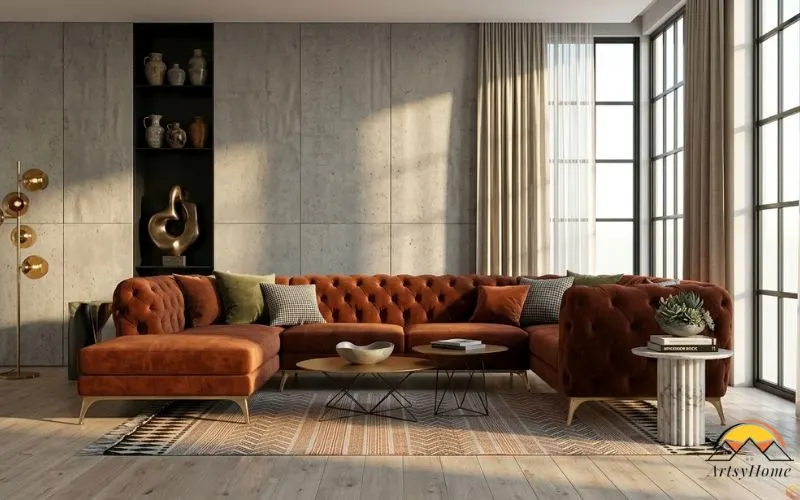
My first designed living room was like a showroom no one inhabited. Sofa, Loveseat, Coffee table, all on one page. Stiff and cold.
Good DrHomey interior design is, by contrast. A cozy house that toils. Sinking so deep it is reluctant to be touched.
Key Takeaway:
- Color: 60-30-10 rule, three colors max per room, then stop.
- Lighting: Three layers or the room looks flat. Warm bulbs (2700K) for bedrooms, brighter (3000–4000K) for kitchens and bathrooms.
- Grouping: Always odd numbers: threes, fives, sevens. Never matching sets.
- 2026: Gray is out. Greige, taupe, and warm khaki are in right now.
- Budget: Paint + right-sized rug + better bulbs = 70% of what a full renovation does.
Table of Contents
What Is DrHomey Interior Design, Really?
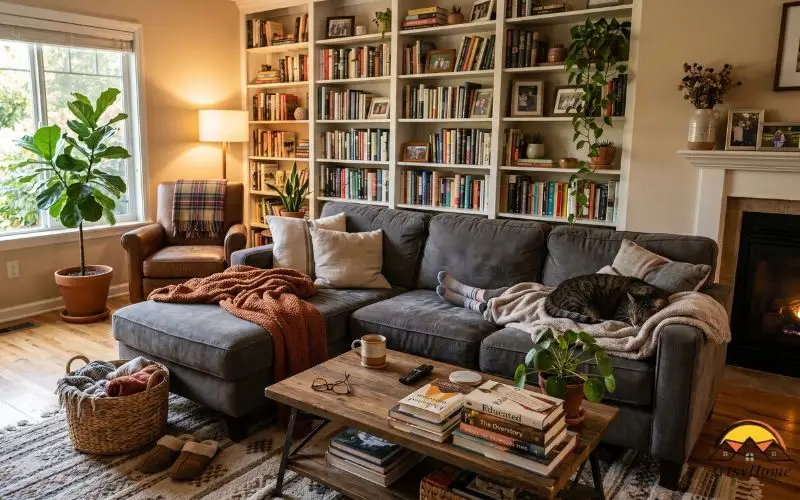
DrHomey interior design is a homely and purposeful approach to modern interior design, where friendliness and ease of use triumph over magazine queen looks. Living on flawlessly, every time.
It’s not a person or a brand, and the spelling gets people’s attention wrong (dr homey, drhomey even “doctor homey”). It’s how you know that warm ‘together at home feeling! My hill to die on? If a room looks terrific in photos but feels cold, then it’s done a poor job of its one mission.
The Design Rules That Actually Matter
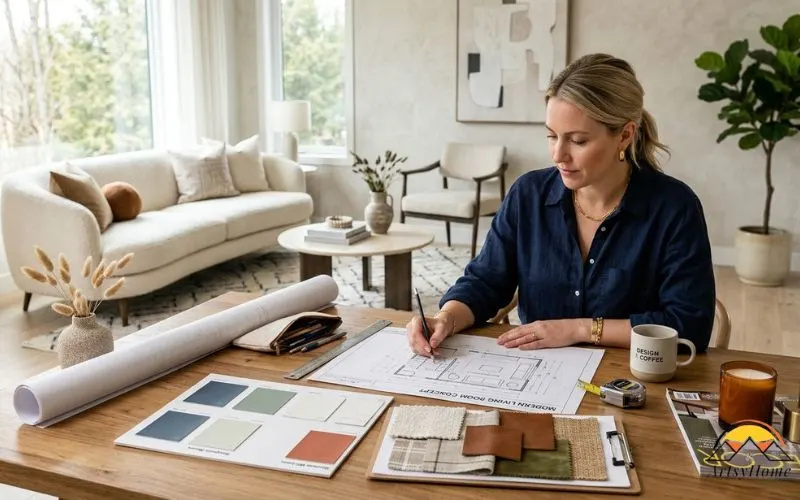
Known design rules are brief. The 60-30-10 color rule helps divide a room into three parts: 60% for primary colors, 30% for secondary colors, and 10% for accent colors. 3-5-7 rule: Group objects in odd number groups. The 70/30 rule combines 70% one style, with 30% the other. The foundation of good, drhomey interior design is the following rules.
If I could keep only one, it’s 3-5-7. Look Stylish When 3 candlesticks are different heights; look Stock When 4 candlesticks are different heights. What the table filters out are the ones that people mix up. The things I use to get interior design drhomey tips : visit the website of DrHomey, not Pinterest!
| Rule | What it actually means | When I use it |
| 60-30-10 | 60% dominant color, 30% secondary, 10% accent | Every room, as the starting palette |
| 3-5-7 | Group objects in odd numbers (3, 5, or 7) | Shelves, mantels, coffee tables |
| 70/30 | 70% one style, 30% a contrasting one (or 70% neutral, 30% bold) | Mixing modern with vintage |
| 3-color rule | Cap a room at about three colors total | When 60-30-10 feels like math |
| 3-4-5 | 3 patterns, 4 styles, 5 colors and textures (also used for grouping and carpenter squaring) | A layered, collected look |
| 4-inch rule | Keep all seat heights within 4 inches of each other | Pairing chairs with a sofa |
What Is the 3-5-7 Rule in Interior Design?
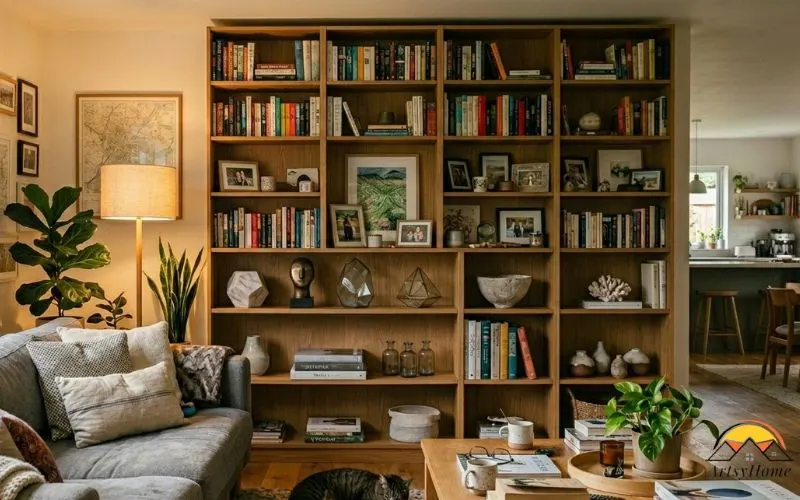
The 3-5-7 rule implies that you use odd numbers of elements 3, 5, or 7 to keep the eye moving and make it appear as if you have selected decoratives rather than staged them.
On each shelf and mantel, there are 3 books, a small vase and one sculptural object, the heights vary. I use it on every shelf and mantel! Even pairs appear as a store display. A strange assembly seems to have grown over the years, which is the essence of drhomey interior design.
What Is the 70/30 Rule in Decorating?
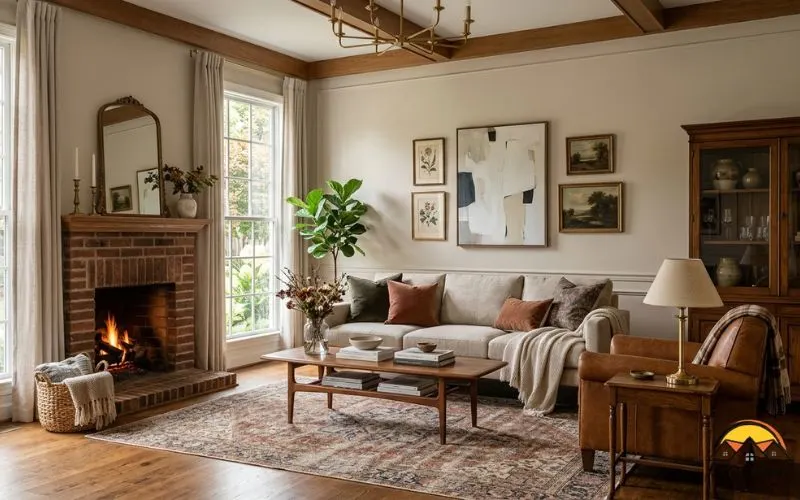
It rules that we allocate around 70% of the room to one style and around 30% to a different style, giving the room a definite identity with a sufficient amount of tension for the room to be interesting.
Beware of its two meanings! Some designers are specifying a ratio of 70% to 30% mostly modern, with a 30% vintage layer. The rest are neither neutral nor bold, they are 70% neutral and 30% bold. Both work. This one I’m referring to as the style split and 60-30-10 does the color split.
What Is the 3-4-5 Rule in Decorating?
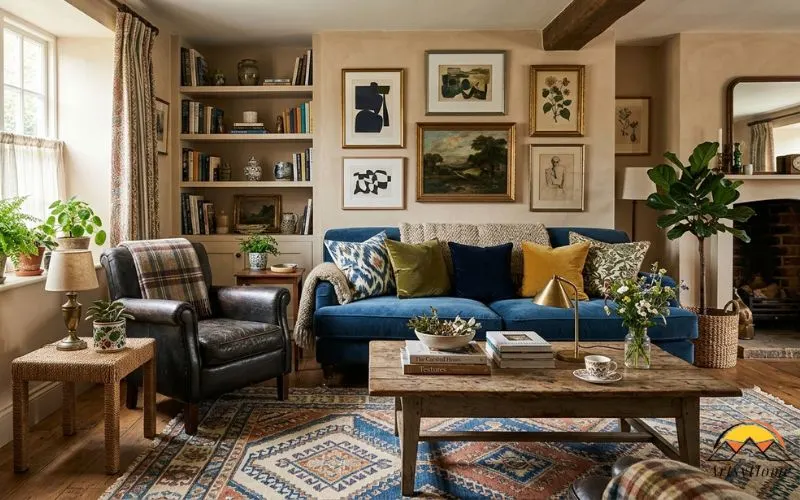
The decorating 3-4-5 rule encourages using three patterns, four design styles/eras and five colours/Texture in order to create a layered and collected room.
This is one of the most confusing rules on the internet. There’s nothing unusual about using 3-4-5 for odd-number grouping, as builders use a 3-4-5 triangle to square a corner when building it as opposed to using it for decor. Ask a person who says it to you which version they are referring to.
The 7 Elements Every DrHomey Room Gets Right
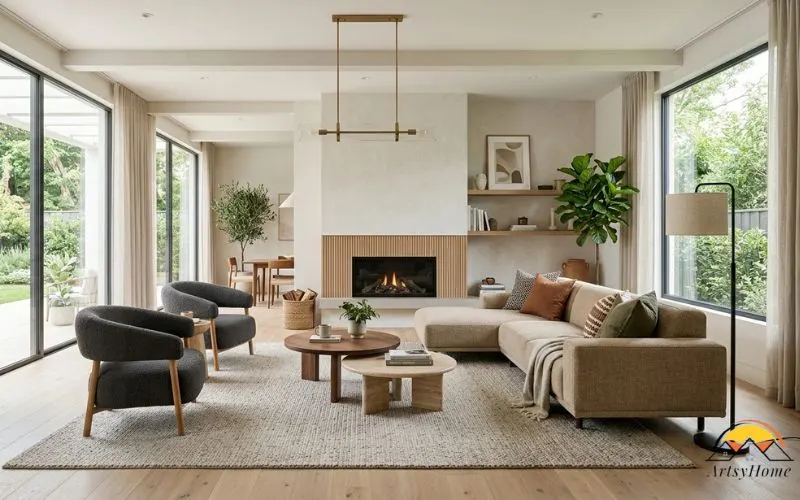
All good room design emphasizes length, breadth, height, amount, shape, color, and fabric. If these are correct, the rules below will mostly be correct. While color is one of the seven, good drhomey interior design rather balances all seven.
- Space: the foundation; leave breathing room, don’t cram
- Line: horizontal calms, vertical lifts, curves soften
- Form: the mass and shape of furniture; mix round with square
- Light: natural first, then three layers (next section)
- Color: sets the mood; lean on 60-30-10
- Texture: the most skipped element, and the best fix for a flat room
- Pattern: adds interest; one or two per room, not five
The one thing people don’t remember is texture. Until I hung a jute rug down in my cream living room and replaced one bouclé chair. Same colors, all different room! Also, think light and greenery: As per EPA notes, we spend about 90% of our time indoors, a room’s daylight and plants can make a part of that time better.
The Thing You’re Getting Wrong
The key to good lighting involves two things: layering three types of light and matching the color temperature, in this case the Kelvin temperature, of each of the bulbs to the room. The truth is, lighting is the key to either the success or failure of any drhomey interior design.
This was learned the hard way. The first kitchen I had got 5000k daylights in all the rooms and it was like a morgue at dinner time! I did the easy upgrade that made it warmer by replacing the 270C bulbs with Philips Hue bulbs, which are 2700K (around $30 a pair). It’s easiest to make the room cheap by installing only overhead lights.
What Are the Three Layers of Light?
Ambient (general fill light), Task (focused light for a particular task) and Accent Light (some beam shining light on art or texture). Most houses, therefore, have just the first.
My rule of thumb is at least three light sources per room, never one ceiling fixture doing all the work. A floor lamp in the corner, a table lamp at seating height, and the overhead on a dimmer will cover almost any space.
What Kelvin Temperature Should Each Room Be?
Switch to warm 2700K to 3000K in bedrooms and living rooms; to bright 3000K to 4000K in kitchens and bathrooms to cool 4000K to 6500K in places where you need focus, such as a home office or garage.
| Room | Kelvin | Lumens (total) | The feel |
| Bedroom | 2700K | 1,500–4,000 | Warm, restful |
| Living room | 2700–3000K | 1,500–3,000 | Cozy, inviting |
| Kitchen | 3000–4000K | 4,000–8,000 | Bright, clean |
| Bathroom | 3000–4000K | 4,000–8,000 | Crisp, flattering |
| Office / Garage | 4000–6500K | 6,000–8,500 | Alert, focused |
I know the upgrade that’s worth $30 the best: a bulb that can be tuned from warm sunlight to cool light with an app, such as Philips Hue White Ambiance.
Room-by-Room DrHomey Design Strategies
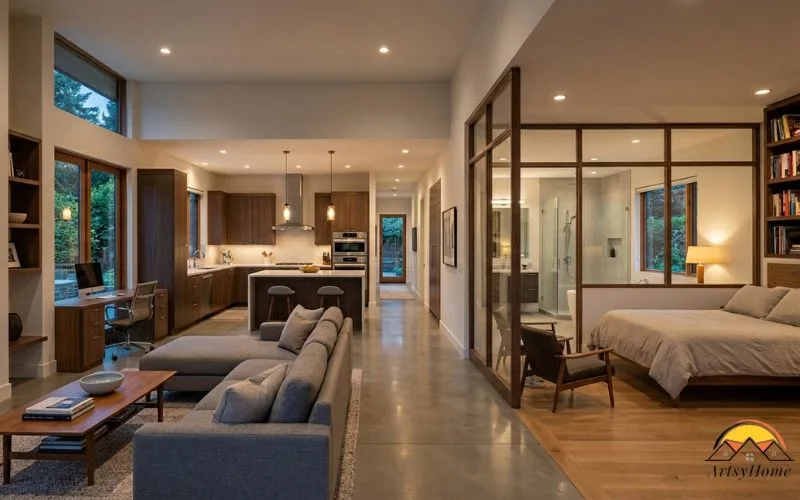
DrHomey interior design goes room by room, but for each room is one significant move! It’s best to nail first and layer. The following are my thoughts for the six rooms that people ask me about most, and the things that I would purchase.
The bedroom is where a lot of money is being lost and one persistent myth: “People paint their bedroom blue; it’s believed to calm the heart.” It might sound like it, but it’s not true. Purchase black-out drapes before that. Also consider the direction of the room: north facing rooms should be warmer in color; south-facing rooms are cooler.
| Room | The one move | What I’d buy | Approx. price |
| Living room | Hide the black-rectangle TV | Samsung The Frame, 55″ | from $1,200 |
| Kitchen | Layer task and ambient light | Under-cabinet LEDs + 3000K bulbs | $40–$120 |
| Bedroom | Block the light, then paint | Blackout curtains + 2700K bulbs | $40–$90 |
| Bathroom | Use a sale-boosting wall color | Light-blue or mid-brown paint, 1 gal | $45–$75 |
| Home office | Add daylight task light | 4000K lamp + Hue bulbs | $50–$150 |
| Entryway | Build a drop zone | Console, tray, and hooks | $80–$300 |
The Living Room
One of the worst features in the living room is the old black TV that is no longer in use. I installed a Samsung The Frame ($1200 for the 55″) to take art when turned off and my roomsey banished the blank screen. If there is enough room, raise the sofa about an inch from the wall.
The Kitchen
The main factor in a kitchen is lighting. Install under cabinet LED strips (40 to ‘twentytwenty dollars) to avoid cutting into your shadow and the overheads on a dimmer ($60 and up). The space is crisp without going over the edge into clinical with a 3000K to 4000K bulb.
The Bedroom
Skip the blue-paint myth and spend on darkness first. Blackout curtains ($40 to $90) plus warm 2700K bulbs do more for sleep than any wall color. Then layer texture: a chunky throw, a fabric headboard, a soft rug your feet land on.
The Bathroom
That color could even be a benefit to you. Light blue bathrooms are associated with higher prices by Zillow’s research thus, a $45 gallon of soft blue or a warm mid brown is a shrewd compact choice. Place a 3000K – 4000K bulb for flattering light at the mirror.
The Home Office
Light range light is needed for your eyes to be clear. A desk lamp ($50-$150) and an adjustable bulb can help you through a mid afternoon slump. Angle the screen against the window to avoid glare on the screen and causing damage to the monitor.
The Entryway
Sometimes, the entrance is the most important element of the room, so to ensure a functional environment, create a drop zone with a thin console, a keys tray, and two wall hooks ($80 to $300 worth of total). It is able to conceal clutter upon entering the home, and gives the impression that everything has been put away on purpose.
Budget Tiers For Interior Design
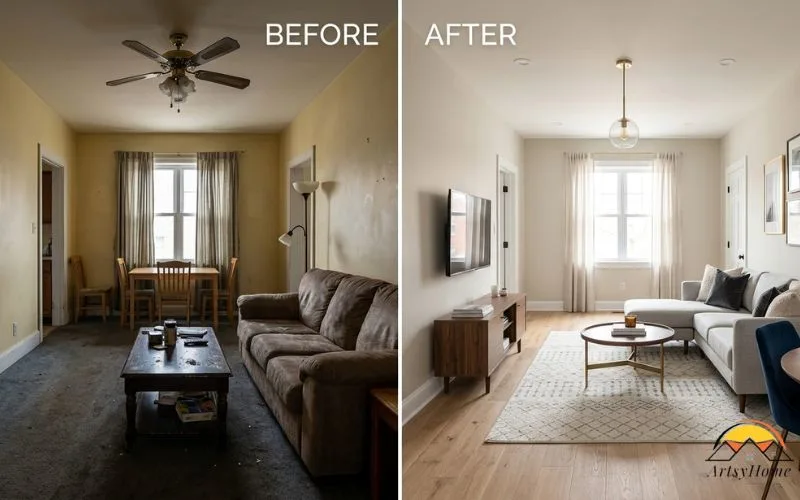
It isn’t necessary to have a large budget to be able to achieve good drhomey design; it’s just about spending it in the right way. At $500 you’re refreshing. $2,500 is the price to build a new room. If it costs $10,000 or more, it’s about changing the bones.
My honest take? The $500 level would provide an approximate visual 70% win. But one expensive sofa is no match for paint, light and one good rug. Behr Dynasty is the better value for paint that isn’t so dark as to need the benefits of Benjamin Moore Aura.
| Budget | Where it goes | A real example | Skip this |
| $500 | Paint, lighting, textiles | 2 gal Behr Dynasty ($110), Hue bulbs ($60), Ruggable rug ($200) | New furniture |
| $2,500 | One anchor piece plus the refresh | Article sofa (~$1,400) + the $500 list | Custom anything |
| $10,000+ | Structure: floors, lighting, built-ins | Refinished hardwood, recessed lights, Lutron shades | Trendy finishes you’ll regret |
What Adds Value vs. What Devalues Your Home
The drhomey interior design moves which are most profitable are exterior changes and refinishing previously owned items. Among the latest garage door choices, a garage door replacement is the leader in the latest Cost vs. Value Report, making a 268% return on your investment. Existing hardwood can be refinished and recovered about 147% – the highest of all interior projects.
What is taking value down is DIY and over-personal taste. I know of one person who had a specific real estate transaction where they lost money because they had changed out their basement bathroom, although it was not an approved upgrade. But even “color” counts: Zillow discovered a dark-gray dwelling room can enhance offers by approximately $2593, whereas bright pink or green will repel purchasers.
| Project | Avg. ROI | Source |
| Garage door replacement | 268% | Cost vs. Value 2025 |
| Steel entry door | 216% | Cost vs. Value 2025 |
| Manufactured stone veneer | 208% | Cost vs. Value 2025 |
| Hardwood floor refinishing | 147% | NAR (realtor estimates) |
| Minor kitchen remodel | 113% | Cost vs. Value 2025 |
| Midrange bathroom remodel | 80% | Cost vs. Value 2025 |
What Adds the Most Value to Your House?
Exterior projects also rank high, but not quite as high as the new items mentioned above: Refinished hardwood (around 147%) comes in first on the inside, but stone veneer (+208%), steel entry door (+216%) and a new garage door (+268%) are leading on the outside.
To capitalize on a home that’s looking to move it up to a higher range, the winners are present too: simplify and update the kitchen, refinish the floor and solve the curb appeal. People don’t tend to get back the kind of money they put into a luxury bathroom, kitchen, or both.
What Devalues a House the Most?
The most apparent factors that reduce value are bad DIY, deferred maintenance, and over personal choices. Even the on-screen beauty of your home could be the reason why it’s not being included in the appraisals, and striking or unusual paint colors can cause prospective buyers to steer clear of your home entirely.
A friend of mine has learned this is what can be done when you need a bathroom job, but don’t have the permission. The solution is straightforward: maintain the house, get permits and repaint all the noisy, warm neutral colors before listing.
Mistakes That Make a Home Look Cheap
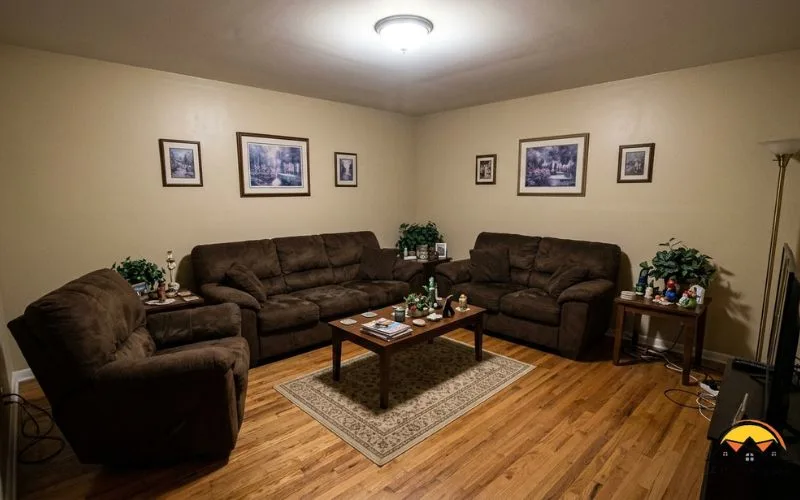
The typical common fails in inexpensive rooms are simple and there are effective, quantifiable remedies for every. Worst of all: matching furniture sets and art that’s hung too high, the rug that’s too small and gray on gray now dated, but modern. These are the errors that creep and destroy the drhomey interior design.
Recall my showroom living room? It was the matching sets that were the crime. The all gray trend is over for color with warm neutral options like greige, taupe, and Sherwin Williams’ Universal Khaki expected for 2026. And don’t forget about the outside: shoddy curb appeal is a chippering effect on the inside.
| Mistake | Why it hurts | The fix |
| Furniture shoved to every wall | Feels like a waiting room | Float seating; in small rooms, against the wall is fine |
| Art hung too high | Floats away from the furniture | Center at 57–60″; leave 6–8″ above a sofa |
| Too-small rug | Furniture looks stranded | Front legs on the rug; size up to 8×10 or 9×12 |
| Matching furniture sets | Reads like a showroom floor | Mix woods, eras, and finishes |
| Dusty fake plants | Looks like an afterthought | Real low-care plants, or none |
| Overhead light only | Flat and harsh | Add table and floor lamps |
| Flat throw pillows | Limp and cheap | Use inserts a size or two larger than the cover |
| Gray-on-gray everything | Dated, not modern | Warm neutrals: greige, taupe, khaki |
What Color Is Replacing Gray in 2026?
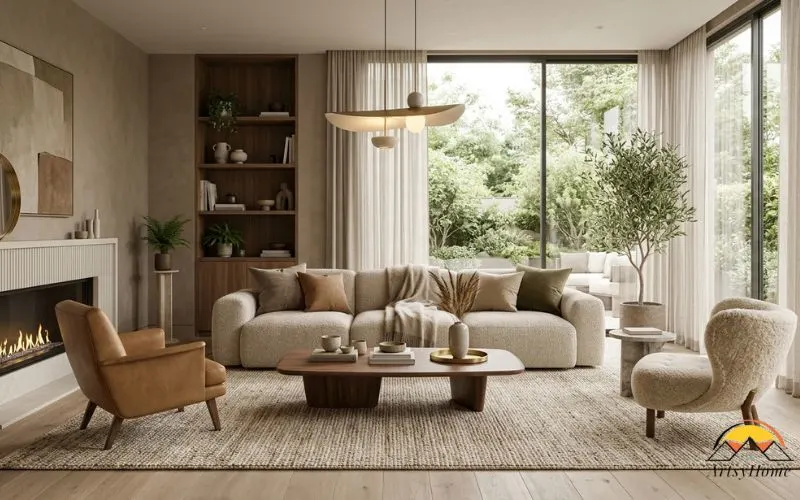
In 2026, warmer neutrals are taking over from grey and include taupe, mushroom, 2D grey shades and softer khakis, among other warms and browns and muted greens. Sherwin-Williams announced that their color of the year for this year is “Universal Khaki” and Benjamin Moore selected a deep espresso brown.
Grey-on-grey is not for me, but it is outdated in the same way that beige was in the 2000’s. Change the walls to a warm greige, give the whole space a new freshness without the need of any renovation.
Is It Okay to Put a Sofa Against the Wall?
It’s okay, as long as the sofa doesn’t take up the entire room. If you have a small room, a sofa against the wall is okay so as long as it doesn’t just take up the whole room. In larger or open plan rooms, floating a few inches from the wall will generally appear more calculated.
The universal don’t push furniture to the wall is over simplified advice does not apply in reality. Small living room? Against the wall, no guilt. Big room? Draw it in, and set it down with a rug to set off the separate seating area.
Where I’d Start This Weekend
Choose one room the room YOU occupy. Go to the store and purchase two cans of quality paint, three warm bulbs and even a rug larger than you believe you will need. This knack of warm, functional spaces, and spaces that aren’t afraid of anyone using them, is Drhomey interior design in a nutshell.
Frequently Asked Questions
The 7 fundamental principles of interior design?
The seven elements of interior design are space, line, form, light, color, texture and pattern. A well designed room will have a balance of all 7 and not simply furnish or use color. The most often neglected element is texture.
Mats are a convenient solution for a room that feels flat in spite of all the other excellent choices. Jute mats, bouclé chairs, chunky knit throw rugs can be the fastest remedy for a room that feels somewhat flat.
What will make a house feel outdated?
The style and the general appearance of the house signal it as outdated: grey on grey colouring, matching sets of furniture from a single source, popcorn ceilings from the 1980s, old outdated brass work, overhead lighting, and dusty fake plants. Most rooms can have a completely new look in warm neutrals, cabinet lighting changeout and more layered lighting.
What is the 3-color rule in interior design?
The 3-color rule is that one must not exceed three colors in a room to ensure the colors are cohesive. It is a simplified version of the 60-30-10 color palette, where one uses one wall color, one curtain color and one small detail/accent color. Most of the time, this is the rule that is being broken when a room appears chaotic.
What’s all that 2ft rule about decorating with?
The 2-foot rule states a minimum walkway distance between furniture of 2 feet (approx. 60 cm), to keep a room open and to allow easy passage around the furniture rather than being cramped.
Use for walk-around shelves, the edge of a bed, and around chairs for dining. The minimum down to which to go in tight areas is 18 inches; anything less will start to feel too cramped to be comfortable.
What is many people’s decorating magic number?
The 4-inch rule says to keep all seat heights in a seating arrangement within 4 inches of each other. This makes the conversation between chairs and sofas comfortable to sit at: even if there are mismatched individual items of furniture, the conversation part looks apt if this is reflected in the chair and sofa height issue. If you plan to purchase an accent chair to complement a current sofa, please be sure to check this prior to purchase.
What items do you think make your home look cheap?
Pillows that are flat and under stuffed, overhead lighting, sets of matched furniture, too small rugs with over-pointed furniture legs, starchy, dusty artificial plants, and exposed cable clutter are the things that make a house look cheap.
The easiest renovations that will feel like more square footage for less money and look fantastic are pillow replacement, a floor lamp, and rug resizing to an 8×10 or 9×12.
Which color is the most suitable color tone to be used in interior decoration?
The best colors are influenced by the room and its light direction; neutral beige, taupe and soft white colors are safe overall, they work well both in pop-up lights and as decor changes around them.